Clearing a Five-Slab Tree-Root Violation on a Historic Harlem Block
Got a DOT violation for a sidewalk that's buckling over a street tree? On a tree-lined block like this one in Harlem, the concrete is rarely the real problem, it's what's happening underneath it. Here's how we cleared a five-slab tree-root violation for a homeowner at 120 W 127th St without touching the tree.
Project Snapshot
| Detail | Info |
|---|---|
| Location | 120 W 127th St, Harlem, NY 10027 |
| Property Type | Residential Property |
| Issue | DOT violation / slab lifting from tree-root growth beneath the sidewalk |
| Scope | 5 flags / approx. 125 sq ft, plus root-related work and root barrier installation |
| Permit(s) | Sidewalk Construction Permit, Sidewalk Closing Permit, Tree Work Permit, LPC Permit |
| Estimated Cost | $5,500 including permit |
| Timeline | Approximately two days on-site and up to 60 days for permitting, tree-work approval, and official violation clearance |
| How They Found Us | Online search after receiving a DOT violation notice |
How This Customer Found Us
The homeowner at 120 W 127th St came across NY Vanta Contractors while searching for a contractor who could handle a sidewalk violation without putting the block's street tree at risk. The lifted concrete ran along a mature tree-lined stretch of the block, and the owner wanted a team that could work through the tree work and LPC approvals as part of the repair rather than treating them as an afterthought. That was the deciding factor in bringing us on for the full scope, from assessment through final sign-off.
The Problem
The sidewalk in front of 120 W 127th St had been pushed up and cracked by root growth from a mature street tree, leaving five slabs uneven enough to catch a foot or a stroller wheel. Unlike ordinary wear-and-tear damage, root-related lifting keeps coming back if you only replace the concrete on top of it, since the pressure underneath hasn't gone anywhere.
Because the property sits in a residential historic district, any work near the sidewalk and tree also had to clear Landmarks Preservation Commission review before construction could start, on top of the standard DOT sidewalk and tree-work approvals. Under NYC Administrative Code §7-210, the responsibility for the sidewalk and the violation sat with the homeowner regardless of the root cause.
Site Assessment
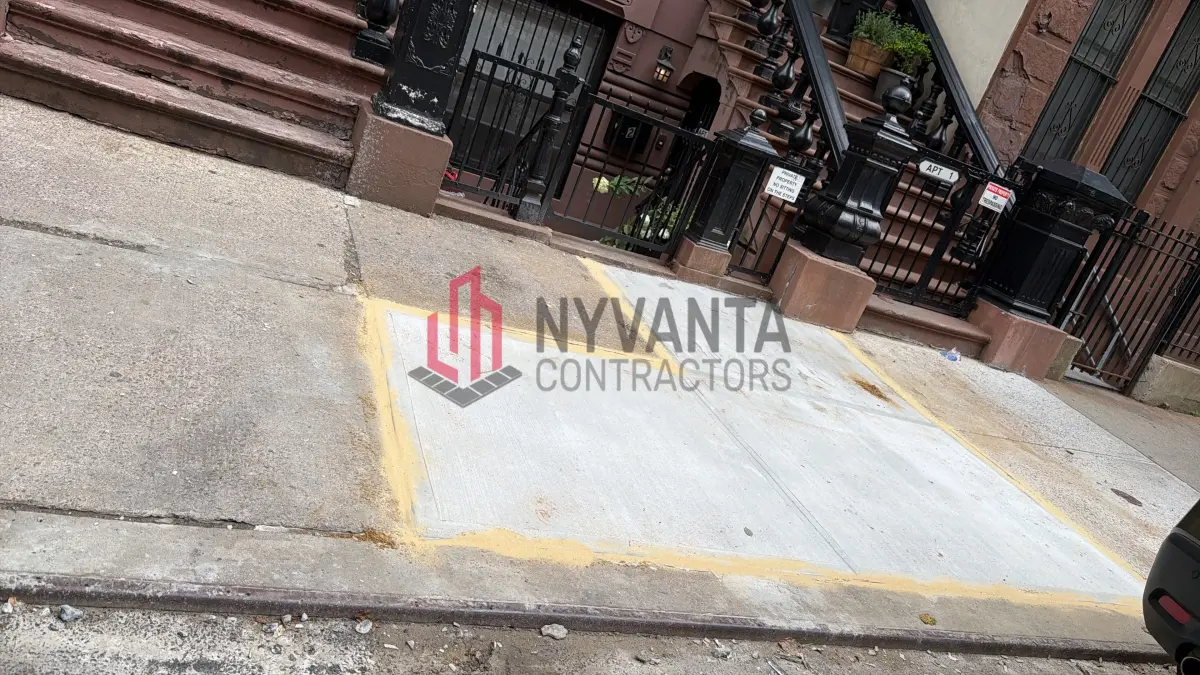
Our team inspected the frontage and confirmed five damaged slabs, roughly 125 square feet total, concentrated around the root zone of the street tree. The lifting pattern, cracking radiating from a central high point rather than scattered settling, pointed clearly to root pressure rather than age or traffic wear. That meant the fix had to include the root condition itself, not just new concrete on top of it.
Because a street tree was involved, we scoped tree work and root barrier installation into the same project rather than pouring new slabs first and dealing with regrowth later. Handling it together meant one permit cycle and one construction window instead of a repair that would likely need redoing in a few years.
Execution
Tree-root repairs follow the same three stages as any sidewalk job, assess and price, secure approvals, and then execute, but with an extra layer of review before the crew can break ground.
Inspection and Estimate
Before any concrete came out, we filed for the full set of approvals this scope required:
- Sidewalk Construction Permit: standard DOT authorization for the slab replacement.
- Sidewalk Closing Permit: needed to close the work zone to pedestrian traffic during construction.
- Tree Work Permit: required for any approved work in and around the tree's root zone.
- LPC Permit: required because the property falls within a designated historic district.
Because the project needed LPC sign-off in addition to DOT approvals, permitting took longer than a standard sidewalk repair.
The Construction Itself
Once every approval cleared, our crew completed the physical work in a single two-day mobilization:
- Demolition: All five root-damaged slabs were broken out and removed.
- Root-related work: Permitted root work was carried out in the affected zone, addressing the pressure causing the lifting without harming the tree.
- Root barrier installation: A root barrier was installed between the tree's root zone and the new sidewalk to reduce the chance of the same damage recurring.
- Concrete pour: New slabs were poured at DOT's required thickness, matched to the surrounding sidewalk's grade and joint spacing.
- Finishing and cure: Sections were finished flush with the adjoining concrete and left to cure before reopening to foot traffic.
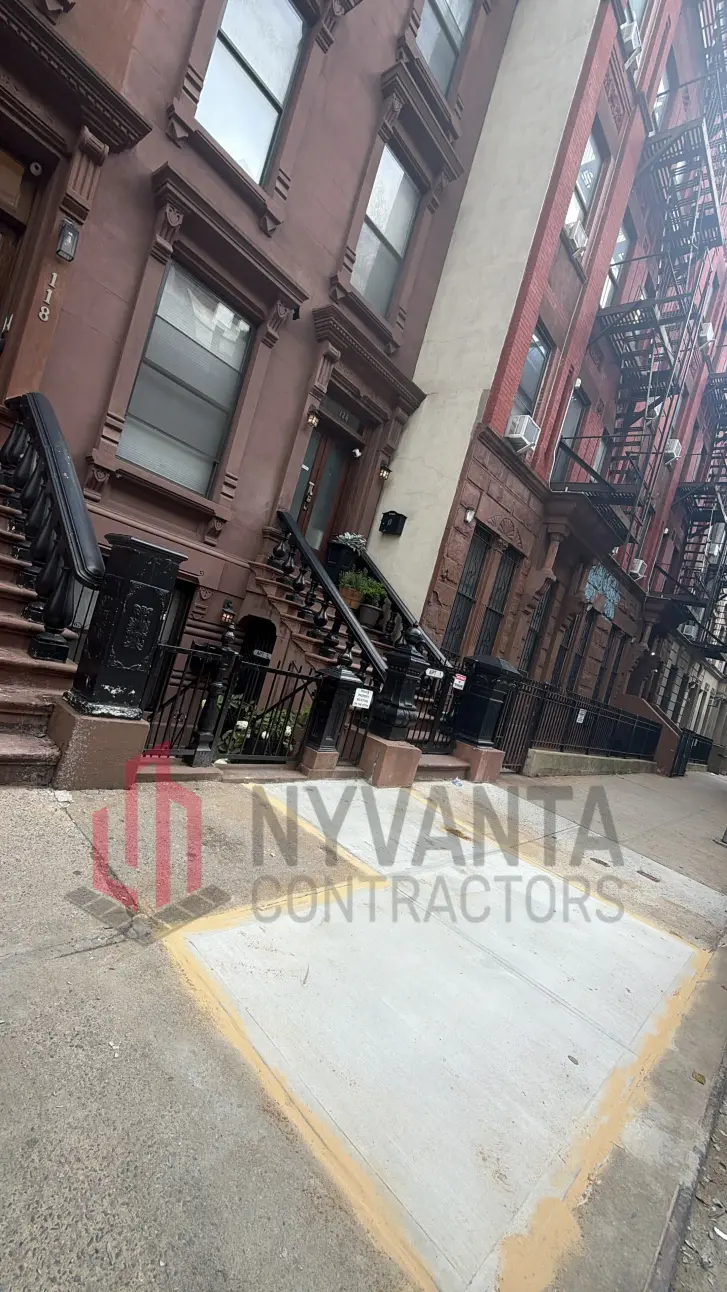
Because the block is a historic, tree-lined street, our crew kept the finished slabs consistent with the surrounding sidewalk so the repair wouldn't stand out on the streetscape.
Final Inspection and Compliance
Once the concrete cured, we coordinated the DOT inspection along with final sign-off on the tree and LPC-related work. The completed repair, sidewalk, root barrier, and root work passed inspection and cleared the violation.
Cost Breakdown
| Item | Cost |
|---|---|
| Sidewalk Construction Permit | $70 |
| Sidewalk Closing Permit | $70 |
| Tree Work Permit | $0 |
| LPC Permit | $0 |
| Root barrier installation | $300 |
| Construction (5 slabs, approx. 125 sq ft) | $5,060 |
| Total | $5,500 |
Results
All five root-damaged slabs were replaced, the underlying root pressure was addressed with permitted tree work, and a root barrier now separates the tree's roots from the new concrete. The sidewalk meets current DOT standards, the violation is cleared, and the tree that caused the original damage is still standing and healthy.
“I didn't want anyone touching the tree without knowing what they were doing, and I definitely didn't want a repair that would just crack again in a few years. NY Vanta handled the DOT side, the tree permit, and the landmark approval without me having to chase down three different offices myself.”
Property Owner, Harlem, NY
Why Harlem Homeowners Choose Us
Tree-lined blocks like this one in Harlem come with an extra layer most sidewalk repairs don't: a street tree that has to be protected and, in many cases, a historic district review that has to be cleared before work can start. We scope the tree work, the LPC approval, and the sidewalk replacement as one project, so homeowners aren't stuck coordinating separate contractors and separate permit timelines for what is really one repair.
FAQs
-
Why does tree-root damage need more than a concrete replacement?
Because the root is still there. If you replace the slab without addressing the pressure underneath it, the same lifting tends to come back within a few years. Root-related work and, often, a root barrier are what keep the fix in place.
-
Do all sidewalk repairs near a street tree need a tree work permit?
Not always, but if the repair scope involves work in or near the tree's root zone, a tree work permit is typically required alongside the standard sidewalk permits.
-
What is an LPC permit, and why would a sidewalk repair need one?
An LPC (Landmarks Preservation Commission) permit is required for exterior work, including sidewalks, on properties within a designated historic district. It adds a review step before DOT permits can move forward, which is why timelines in these areas tend to run longer.
-
Will removing tree roots for the repair harm the tree?
Not when it's done correctly. Root-related work for a sidewalk repair is scoped and permitted to address only what's causing the lifting, with the goal of protecting the tree's health, not removing it.
-
How long does a tree-root sidewalk repair take?
Construction itself is typically about two days on-site, similar to a standard repair. The total timeline is longer, usually up to 60 days, because of the added tree work and, where applicable, LPC review before permits clear.
Tree Roots Pushing Up Your Sidewalk in Harlem?
If a street tree has damaged your sidewalk and you've received a DOT violation, our team at NY Vanta Contractors handles the tree-work approvals, LPC review where required, and the concrete replacement as one coordinated project.
Give us a call at (718) 593-4048 for a sidewalk inspection and repair estimate in Manhattan.