Sidewalk Violation Repair at 61-42 168th St, Flushing, Queens, NY 11365
Are worn, uneven, or deteriorated sidewalk flags in front of your Queens property creating a safety concern or leading to a NYC DOT violation? At this residential property in Flushing, the issue was not caused by a single major event. Years of regular pedestrian use, weather exposure, and general wear had gradually deteriorated several sections of the sidewalk until repairs were necessary.
Our team at NY Vanta Contractors replaced the affected concrete, handled the required sidewalk permitting and utility coordination, and prepared the frontage for final violation clearance.
Project Snapshot
| Detail | Info |
|---|---|
| Location | 61-42 168th St, Flushing, Queens, NY 11365 |
| Property Type | Residential |
| Issue | NYC DOT sidewalk violation caused by high foot traffic, general wear, and deterioration |
| Scope | 5 sidewalk flags / approximately 125 sq. ft. |
| Permit(s) | NYC DOT sidewalk permits and 811 Utility Mark-Out Ticket |
| Estimated Cost | $3,325 construction + approximately $140 permits = $3,465 total |
| Timeline | Approximately 2 days on-site and up to 60 days for official violation clearance |
| How They Found Us | Google Search |
How This Flushing Homeowner Found Us
The property owner came across our sidewalk repair services through a Google search while looking for a contractor experienced with NYC DOT violations in Queens.
The sidewalk had already been showing signs of deterioration from years of everyday use, but once the violation became an active compliance issue, the owner wanted to get the damaged sections corrected properly rather than patching individual cracks and risking another problem later.
They were looking for a contractor who could evaluate the affected flags, manage the required sidewalk permit process, arrange the utility mark-out, complete the concrete replacement, and stay involved through the violation-clearance process.
After discussing the scope and inspecting the frontage, we identified five flags that needed full replacement.
The Problem
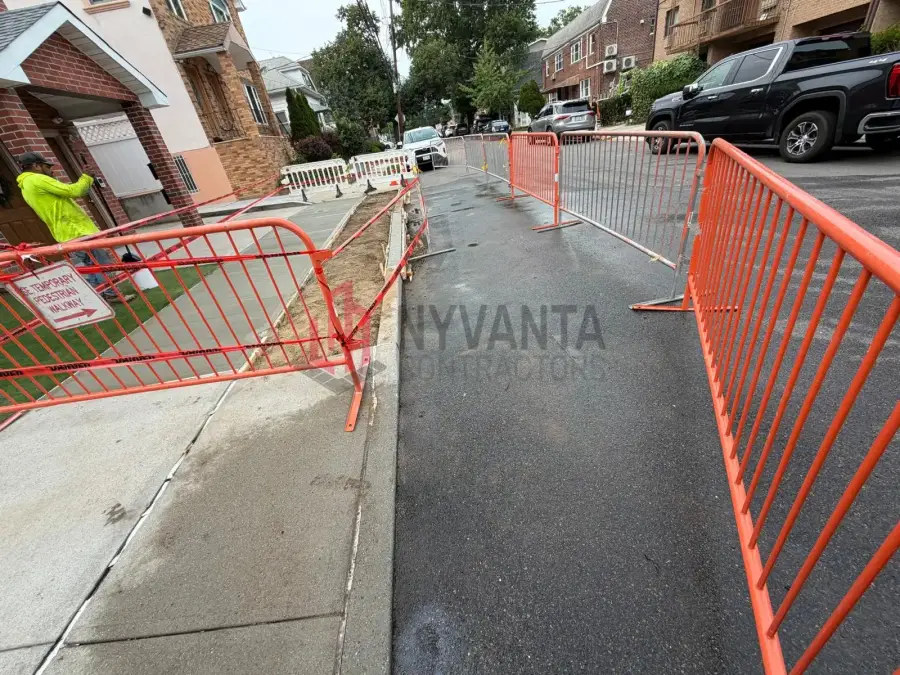
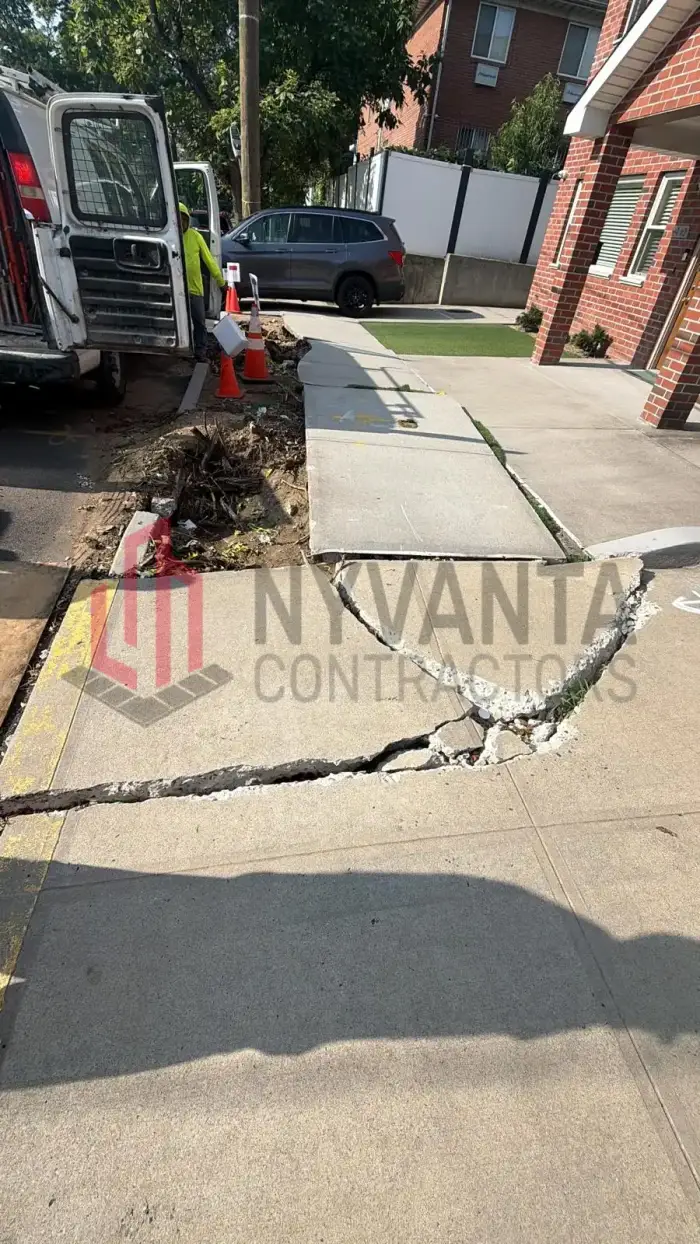
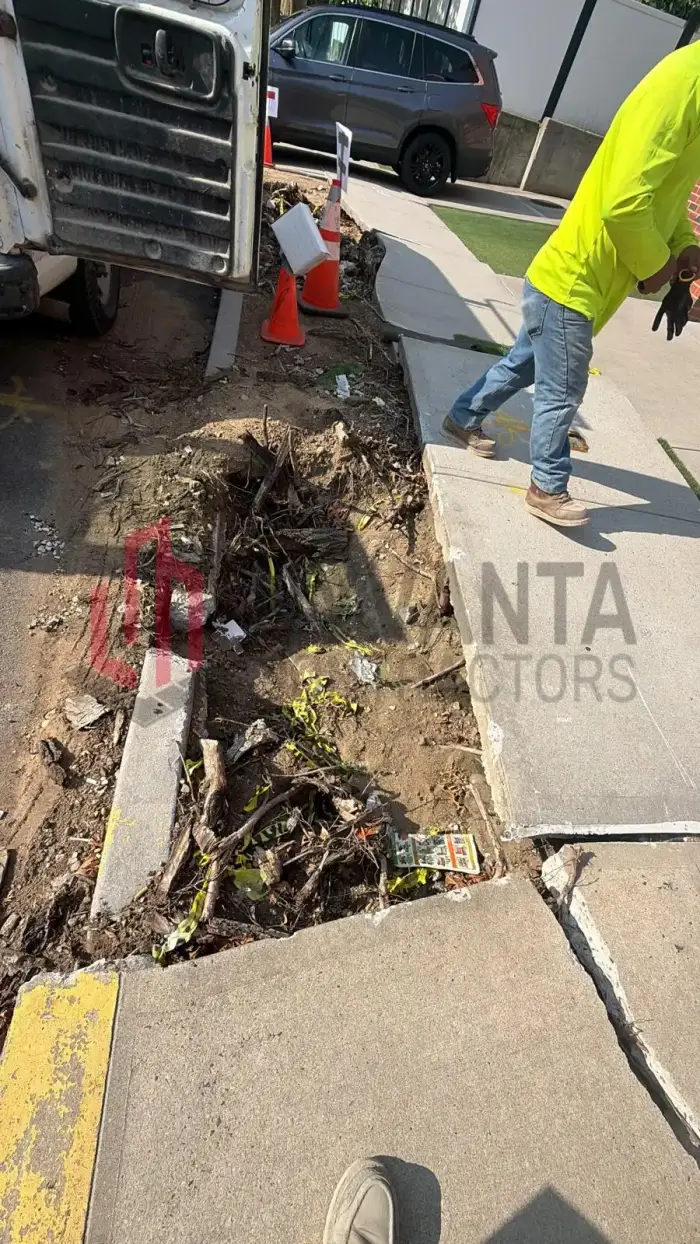
The sidewalk in front of 61-42 168th St had deteriorated gradually rather than failing from tree-root movement or a major structural issue. Regular pedestrian traffic, seasonal weather changes, surface wear, and years of everyday exposure had left several flags visibly worn and no longer in suitable condition. Approximately 125 square feet of sidewalk, divided across five affected flags, required replacement.
For a residential property, damaged sidewalk sections can create more than just an appearance problem. Uneven or deteriorated walking surfaces can create trip hazards for residents, visitors, delivery workers, and pedestrians using the public sidewalk.
Because the frontage was already associated with an NYC DOT violation, the repair also needed to be completed in a way that addressed the cited conditions and met applicable sidewalk standards.
Site Assessment
During our initial inspection, the team evaluated the full sidewalk frontage instead of automatically replacing every slab. The damage pattern showed general deterioration consistent with long-term use and exposure rather than concentrated root heaving.
We identified five flags that had deteriorated enough to justify complete removal and replacement, covering approximately 125 square feet in total. The surrounding sections remained serviceable, which allowed the project to stay focused on the areas that actually required corrective work.
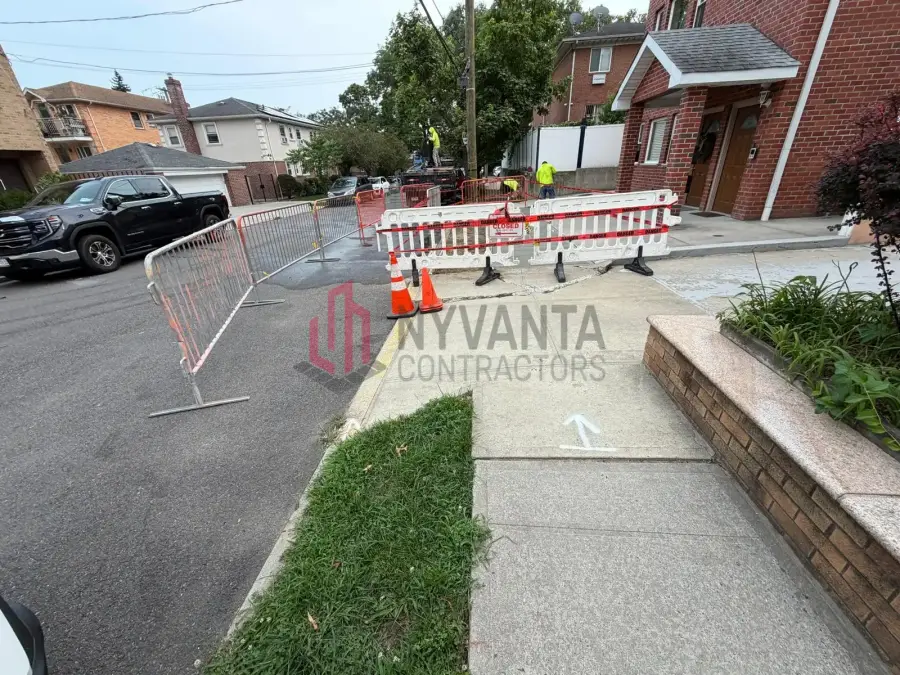
Before excavation started, we also arranged an 811 Utility Mark-Out Ticket so underground utilities near the work area could be identified before demolition. This is an important step on sidewalk projects because gas, electric, telecommunications, water, and other utility infrastructure can run beneath or close to the public right-of-way.
How We Completed the Repair
Unlike a tree-root restoration project, this job did not require root pruning, a tree work permit, or root barrier installation. The focus was straightforward: remove the five deteriorated sidewalk flags, rebuild the affected sections correctly, and prepare the property for violation clearance.
Initial Inspection and Scope Confirmation
The first stage involved confirming exactly which sidewalk sections needed replacement.
Rather than treating ordinary surface wear as a reason to reconstruct the entire frontage, we measured the deteriorated areas and established a repair scope of five flags totaling approximately 125 square feet.
This allowed the owner to address the violation efficiently while avoiding unnecessary work on concrete that was still in acceptable condition.
Permits and Utility Coordination
Once the scope was finalized, we handled the necessary pre-construction requirements. The project included:
- NYC DOT sidewalk permit coordination for the concrete replacement work
- 811 Utility Mark-Out Ticket before excavation
- Scheduling the work so demolition and pouring could be completed efficiently
Completing these steps before demolition helped keep the project organized and reduced the chance of delays once the crew arrived.
Removal of the Damaged Concrete
The five deteriorated flags were saw-cut and broken out carefully.
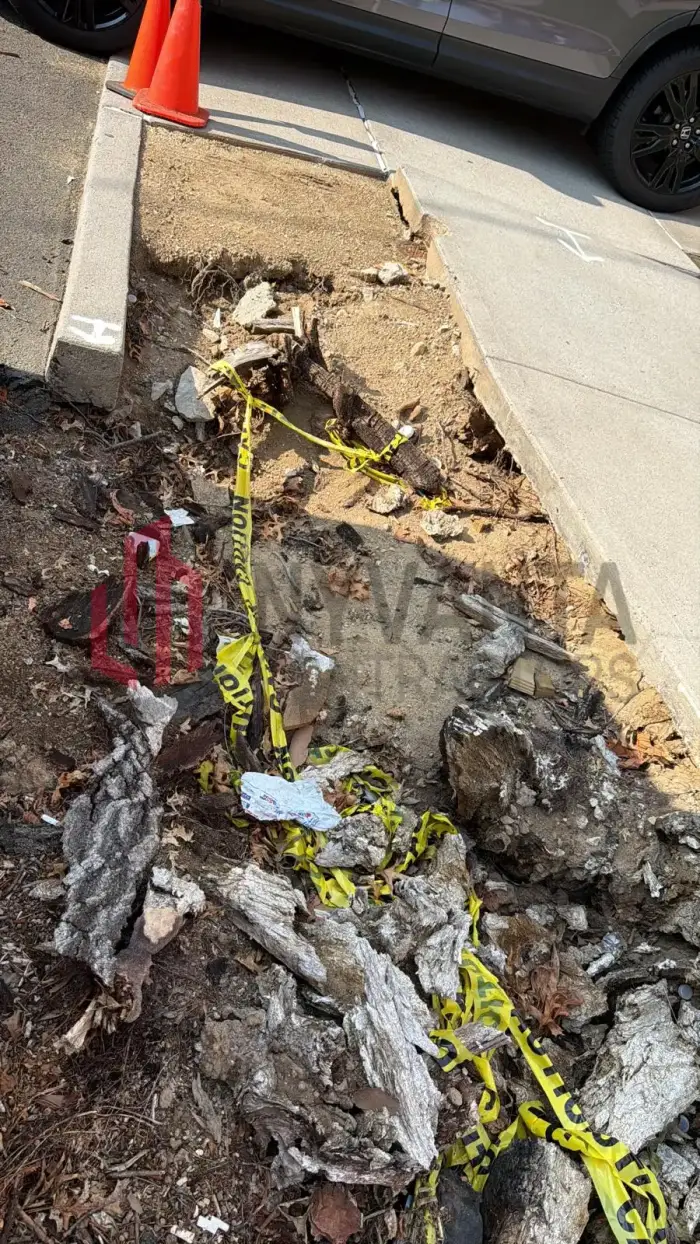
The old concrete was removed from the work area and hauled away, exposing the underlying base so the crew could evaluate and prepare it before the new sidewalk was poured.
Removing the full affected flags instead of applying superficial patching gave the property a more durable repair and a cleaner finished appearance.
Base Preparation
Once the damaged concrete was removed, the underlying surface was prepared for the replacement slabs. A stable base is important because even high-quality concrete can crack or settle prematurely if it is installed over poorly prepared or uneven material. The crew corrected the affected areas, compacted the base where necessary, and prepared the elevations before placing the new concrete.
Concrete Replacement
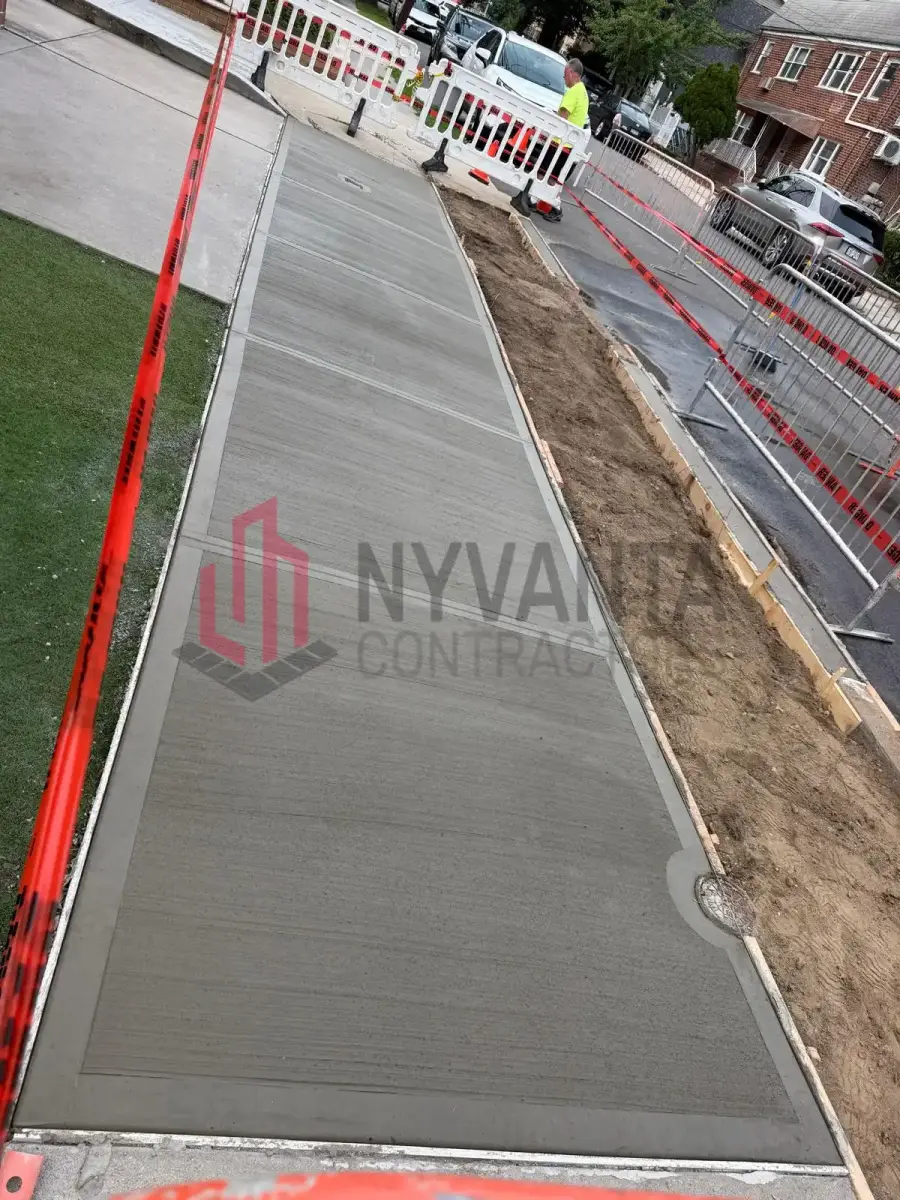
The replacement concrete was poured to restore the five affected sidewalk flags and approximately 125 square feet of frontage.
The crew maintained proper grading and transitions between the repaired sections and the surrounding sidewalk so the completed surface would be smooth and suitable for pedestrian traffic.
The new concrete was then finished with a practical sidewalk texture designed to provide traction while maintaining the clean appearance expected at a residential property.
Curing and Site Cleanup
After finishing, the repaired sections were protected while the concrete began curing.
The crew cleaned the surrounding work area, removed construction debris, and kept the frontage organized so disruption to the property remained limited.
The physical construction portion of the project was completed in approximately two days on-site.
Final Violation Clearance
Completing the concrete work is one part of a sidewalk violation project. The violation also has to move through the appropriate NYC DOT clearance process.
After the repair was completed, the property entered the follow-up stage for official violation review and clearance.
We allowed for a timeline of approximately 60 days for the administrative and inspection process associated with official violation removal.
This longer clearance period is separate from the actual construction timeline, which was completed in roughly two days.
Cost Breakdown
| Item | Estimated Cost |
|---|---|
| Concrete sidewalk replacement – approximately 125 sq. ft. | $3,325 |
| Sidewalk permit costs | Approximately $140 |
| 811 Utility Mark-Out Ticket | No direct charge |
| Estimated Total | $3,465 |
Results
By the end of the project, all five deteriorated sidewalk flags had been removed and replaced, restoring approximately 125 square feet of pedestrian surface in front of the property.
The repair eliminated the most heavily worn and damaged sections that contributed to the violation while giving the frontage a cleaner and more uniform appearance.
Because the work was limited to the flags that actually required replacement, the owner was able to resolve the problem without unnecessarily reconstructing the entire sidewalk.
The project also demonstrated that not every NYC sidewalk violation is caused by dramatic tree-root damage or severe structural movement. In many cases, years of regular foot traffic, weather exposure, and general wear are enough to gradually push older sidewalk sections beyond an acceptable condition.
What Made This Flushing Sidewalk Project Different?
This project was primarily a wear-and-deterioration repair, not a root-damage project. That distinction affected everything from the permit requirements to the construction scope.
There was no need for tree-root excavation, arborist coordination, root pruning, or root barriers. Instead, the work centered on accurately identifying the five deteriorated flags, safely removing them, preparing the base, and replacing the concrete without disturbing sidewalk sections that remained serviceable.
For the homeowner, this meant a more focused repair, a shorter physical construction period, and a project cost directly tied to the actual damaged area.
FAQs
-
Why were only five sidewalk flags replaced?
Our inspection found that the violation-related deterioration was concentrated within five flags covering approximately 125 square feet. The surrounding sidewalk did not require full replacement, so the project was limited to the sections that actually needed corrective work.
-
What caused the sidewalk deterioration at this property?
The deterioration was primarily associated with regular pedestrian traffic, weather exposure, aging concrete, and general wear over time. There was no significant tree-root damage included in the project scope.
-
Was an 811 mark-out necessary for a relatively small sidewalk repair?
Yes. Even smaller sidewalk excavation projects can take place near buried utility infrastructure. The 811 mark-out provides information about utility locations before demolition begins and is an important pre-excavation safety step.
-
How long did the actual sidewalk replacement take?
The on-site construction work was completed in approximately two days.
-
Why can violation clearance take much longer than the repair itself?
The physical repair can often be completed quickly, but official violation clearance involves the city's inspection and administrative process. For this project, approximately 60 days were allowed for that stage.
Need Sidewalk Violation Repair in Flushing or Elsewhere in Queens?
If your sidewalk has deteriorated from years of pedestrian use, weather exposure, cracking, or general wear, waiting until the problem spreads can turn a relatively focused repair into a much larger project.
Our team handles sidewalk violation repairs throughout Queens, including permitting, 811 utility coordination, concrete removal, replacement, and assistance with the final compliance process.
Call (718) 593-4048 to request a free sidewalk inspection and estimate.