How We Cleared a Sidewalk Violation for Bronx Business Owners in the Concourse
Running a business at 101 E 168th St and just got hit with a DOT violation on the sidewalk out front? Commercial frontages see far more foot traffic than a typical residential block, and that traffic adds up fast. Here's how we cleared a 6-slab violation for a commercial property in the Concourse without shutting down access to the businesses inside.
Project Snapshot
| Detail | Info |
|---|---|
| Location | 101 E 168th St, Bronx, NY 10452 |
| Property Type | Commercial Property |
| Issue | DOT violation / concrete deterioration due to heavy foot traffic & weather |
| Scope | 6 slabs / 150 square feet |
| Permit | Sidewalk repair permit, 811 utility mark-out ticket |
| Estimated Cost | $3,724 + $70 = $3,794 |
| Timeline | Approximately three days on-site and 60 days for official violation clearance |
| How They Found Us | Online search after receiving violation notice |
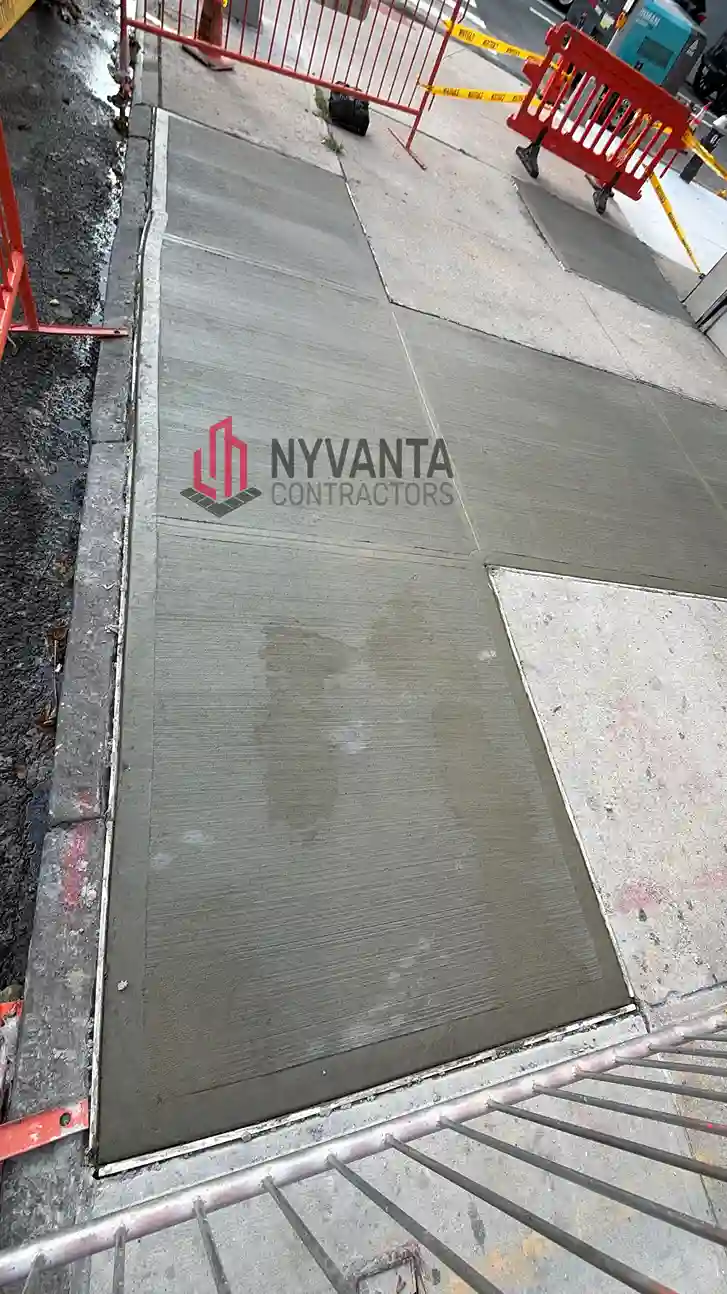
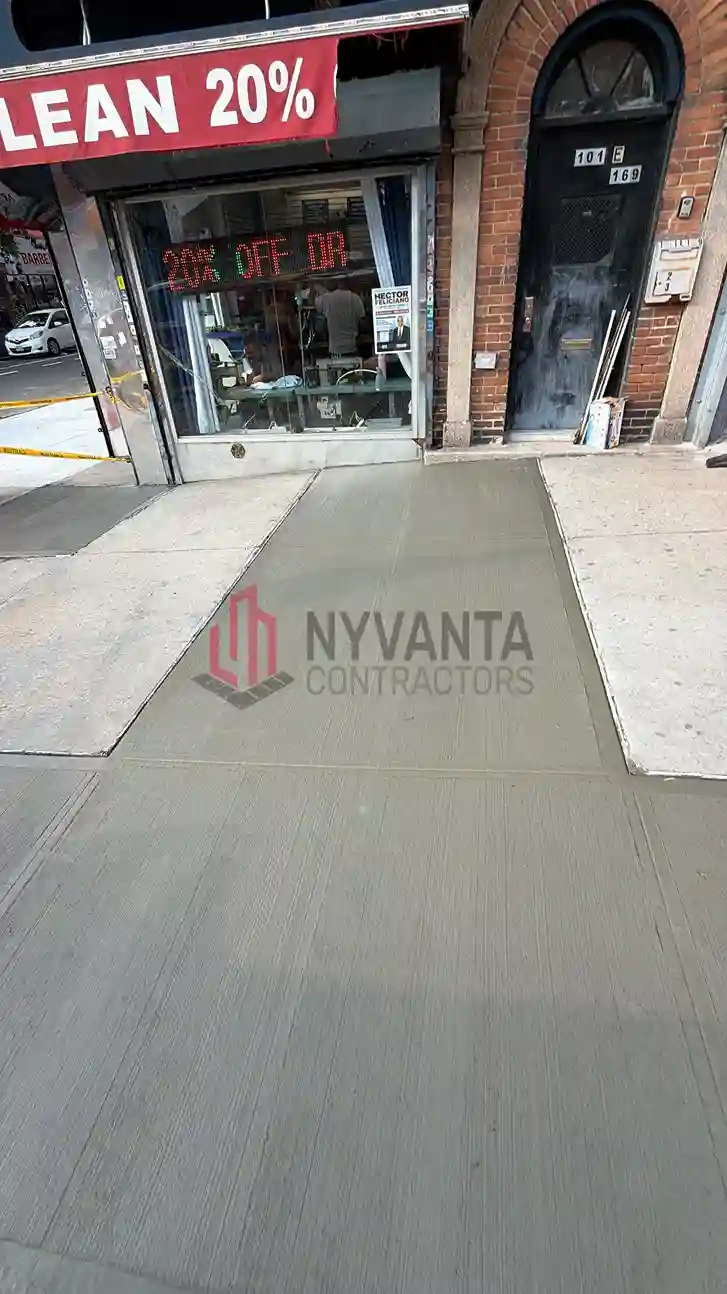
How This Customer Found Us
The property owner at 101 E 168th St manages a commercial building that houses several local businesses, which meant the sidewalk out front saw daily foot traffic from customers, deliveries, and employees on top of general pedestrian flow through the Concourse. After a DOT violation notice flagged multiple failing slabs along the frontage, the owner searched for a contractor experienced with commercial sidewalk work and reached out for a quote. Because the property stayed open and active throughout the project, minimizing disruption to the businesses inside was a priority from day one.
The Problem
Commercial sidewalks take a different kind of punishment than residential ones. At 101 E 168th St in the Bronx, years of steady foot traffic combined with weather exposure had left 6 slabs cracked, uneven, and settled below grade, creating the kind of height differential DOT inspectors cite as a trip hazard. With businesses operating out of the building, that hazard sat directly in the path of customers and deliveries every day the violation went unaddressed.
Under NYC Administrative Code §7-210, the property owner, not the city, is responsible for sidewalk maintenance and any injury liability that comes with a failing sidewalk. For a commercial property with regular customer traffic, that liability exposure is higher than it would be on a quiet residential block, which made resolving the violation quickly a priority.
Site Assessment
Our team inspected the full frontage and identified 6 damaged slabs totaling roughly 150 square feet. The damage pattern pointed to long-term wear from consistent foot traffic rather than root intrusion or a single point of failure, which meant a full slab-by-slab replacement was the right call rather than a partial patch.
Because the sidewalk served as the main pedestrian approach to multiple businesses, we planned the work in phases to keep at least partial access open throughout construction rather than closing the entire frontage at once.
Execution
Commercial sidewalk violations follow the same core process as residential ones: assess and price, secure approvals, then execute. The difference is in how the work gets sequenced around an active business.
Inspection and Estimate
Before any demolition began, we filed for the approvals this scope required:
- Sidewalk Repair Permit: the standard DOT authorization for slab replacement.
- 811 Utility Mark-Out Ticket: submitted ahead of excavation to flag buried utility lines along the frontage.
With no landmark review or special district restrictions on this stretch of E 168th St, approvals moved through DOT's standard channel.
The Construction Itself
Once permits cleared, our crew worked through the frontage over three days:
- Demolition: All 6 damaged slabs were broken out and removed in sections to keep pedestrian access open to the businesses.
- Base preparation: The subbase was excavated and properly compacted along the full 150 square feet to give the new concrete a stable, level foundation.
- Concrete pour: New slabs were poured using reinforced concrete to hold up to the sidewalk's heavier commercial foot traffic, with expansion joints placed to control cracking from seasonal ground movement.
- Finish work: A durable broom finish was applied, which meets DOT slip-resistance requirements and holds up better than a smooth finish under high pedestrian volume.
- Cure and reopen: Sections were finished to grade and left to cure before reopening to full foot traffic.
Final Inspection and Compliance
Once the concrete cured, we coordinated the DOT inspection on the owner's behalf. The completed sidewalk passed on the first visit, clearing the violation and bringing the full frontage into compliance under NYC Administrative Code §7-210 and DOT Highway Rules.
Cost Breakdown
| Item | Cost |
|---|---|
| Sidewalk Repair Permit | $70 |
| 811 Utility Mark-Out Ticket | Free |
| Construction (150 sq. ft. with reinforced concrete) | $3,724 |
| Total | $3,794 |
Results
All 6 damaged slabs across 150 square feet of frontage were replaced with reinforced concrete and a durable broom finish, eliminating the trip hazards created by years of settling and cracking. The sidewalk now meets current DOT standards, the businesses inside stayed open throughout construction, and the violation was cleared without a second inspection.
“We couldn't afford to shut the whole sidewalk down with tenants relying on foot traffic every day. They worked it in sections so customers could still get in, and it still only took a few days total. Passed inspection the first time.”
Commercial Property Owner, Bronx
Why Concourse Property Owners Choose Us
Commercial properties in the Concourse deal with heavier, more constant foot traffic than residential blocks, which means violations here often involve more slabs and a bigger compliance stake. We plan commercial sidewalk repairs around keeping the property operational, phasing demolition and pour work so businesses aren't forced to close during construction.
FAQs
-
Do commercial sidewalks need a different type of concrete than residential ones?
Often, yes. High foot-traffic areas like commercial frontages typically call for reinforced concrete, which holds up better under continuous daily use than standard residential-grade slabs.
-
Can a business stay open during sidewalk repair?
In most cases, yes. Phasing the work in sections, rather than closing the entire frontage at once, keeps at least partial pedestrian access open while repairs are underway.
-
Who is responsible for sidewalk violations at a commercial property in NYC?
Under NYC Administrative Code §7-210, the property owner is responsible for sidewalk maintenance and repair, regardless of whether the property is residential or commercial.
-
How long does a commercial sidewalk violation take to clear?
Construction itself typically runs a few days depending on scope, while the DOT's official violation clearance process can take up to 60 days after the repair passes inspection.
-
What finish is used for high-traffic commercial sidewalks?
A broom finish is standard for commercial sidewalks because it provides slip resistance for heavy daily foot traffic while still meeting DOT surface requirements.
Need Sidewalk Violation Removal for a Commercial Property in the Bronx?
If your business is dealing with a DOT sidewalk violation, our team handles the entire process, permitting, excavation, reinforced concrete installation, and final inspection, while working around your property's daily operations.
Give us a call at (718) 593-4048 and request a free estimate today.