-
1573 Carroll St, Brooklyn, NY 11213
Who Is Responsible for Sidewalk Repair in NYC? Sidewalk Liability Guide
Sep 11, 2026
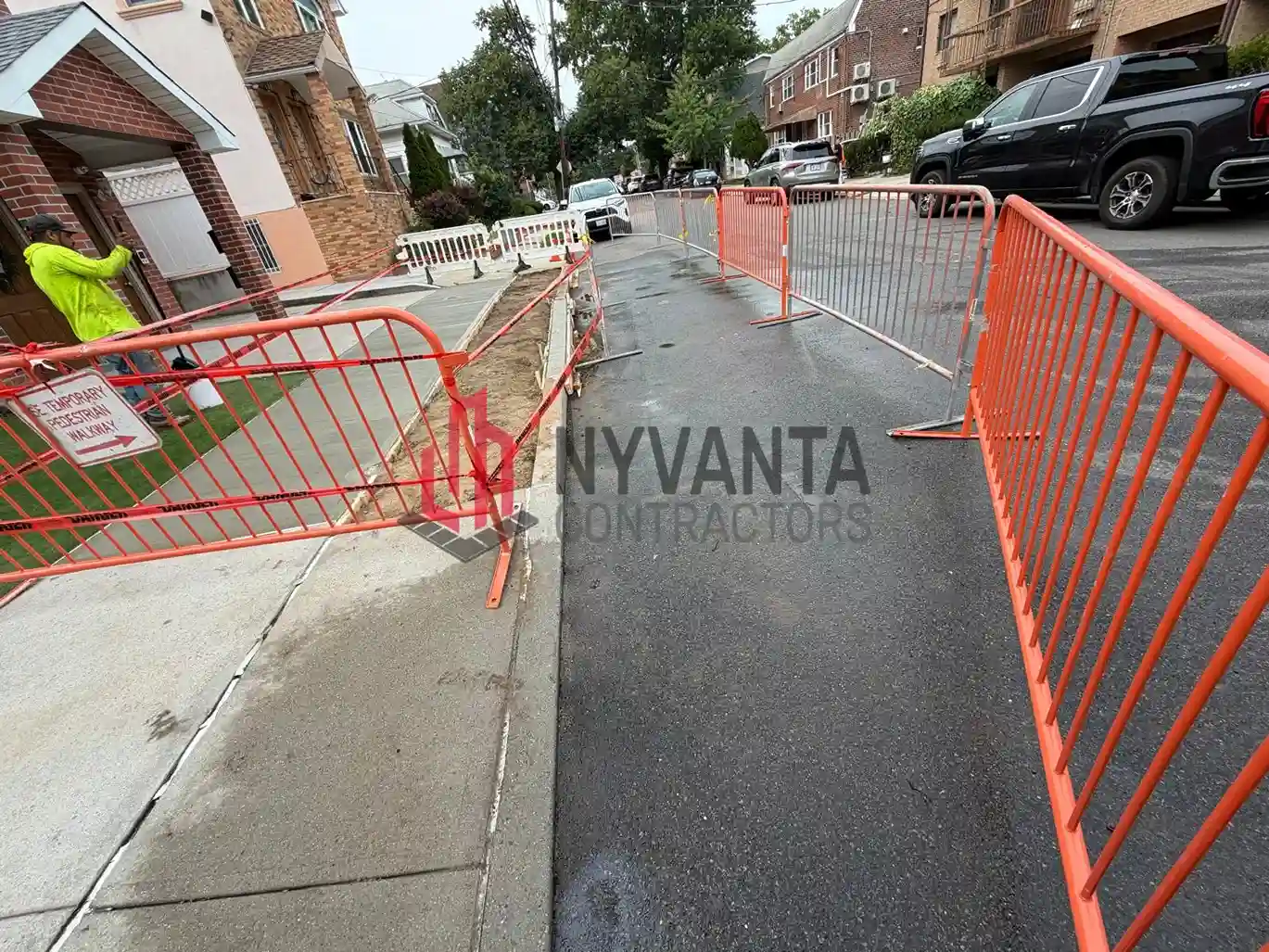
In New York City, the sidewalk in front of your building is your responsibility, not the city's. Property owners are required to install, repair, and maintain the sidewalk that adjoins their property, and they can be held financially responsible when someone gets hurt on it. That is the short answer, and it surprises a lot of people who assume public concrete means public upkeep.
There is one meaningful exception, a few situations where another party picks up the bill, and a strict process that kicks in the moment a Department of Transportation inspector flags your flags. Here is how all of it works, straight from the city's own rules.
The Two Laws That Put the Sidewalk in Your Lap
Sidewalk responsibility in NYC comes down to two sections of the Administrative Code, and they do two different jobs.
Section 19-152: The Duty to Repair
This is the maintenance rule. It makes property owners responsible for installing, repairing, and maintaining the sidewalk next to their property, and it lists the conditions the city treats as defects. When DOT issues a Notice of Sidewalk Violation, this is the section it is enforcing, and it is also what lets the city do the work itself and bill you if you do not act.
Section 7-210: The Duty Not to Hurt Anyone
This is the liability rule, and it is the expensive one. Under 7-210, property owners are personally liable for injuries caused by their failure to keep the sidewalk free of defects. If a pedestrian trips on a raised flag outside your building and sues, this is the law their attorney will be pointing at. You can be perfectly violation-free and still be sued, because a lawsuit does not require DOT to have noticed the problem first.
Is the City Responsible for Sidewalk Repair?
Almost never, with one real exception. Section 7-210 carves out one, two, and three family residential properties that are owner-occupied and used exclusively for residential purposes. If you live in your own two-family house in Bay Ridge and nothing on the lot is commercial, you are generally not liable under 7-210 for a pedestrian injury on the abutting sidewalk. Liability in that situation typically falls back to the city, which only becomes responsible if it had prior written notice of the defect and failed to fix it within the statutory window.
Read those conditions closely before you assume the city is on the hook. Rent out the whole house and live elsewhere, and the exemption is gone. Run a hair salon out of the ground floor, and it is gone. Own a four-family building, and it never applied. The exemption also covers injury liability only. The city still does not repair your sidewalk for you, and you are still responsible for the work under 19-152.
When Someone Else Pays for the Damage
Owning the obligation is not the same as owning every cause. A few scenarios shift the cost somewhere else, so check before you write a check.
City Tree Roots
Street trees are the single most common reason sidewalks lift in NYC, and the city has softened its position here. DOT no longer issues violations or places liens on one, two, and three family properties when the sidewalk damage was caused solely by City trees, and it does not charge those owners for the repair. The Parks Department also runs the Trees and Sidewalks Program, which repairs severe root damage in front of qualifying small homes at no cost. You can request enrollment through 311. Funding is limited, and sites are ranked by severity, so the wait can be long. One rule is absolute: cutting or shaving the roots of a City tree is prohibited, no matter how tempting it looks.
For buildings with four or more units, commercial properties, and vacant lots, tree root damage is still the owner's problem.
Utility Companies and Outside Contractors
If a utility or an outside contractor tore up your sidewalk and left it in bad shape, document the damage and go after the company that did it. DOT keeps a public record of the permits it issues, so you can look up what work was approved at your address. Claims go to that company's claims department, not to the city.
Curbs and Vaults
Owners are encouraged to repair or replace defective curbs, but DOT may replace them at no cost when it is already performing sidewalk work tied to a violation or when there is an active curb repair contract in the area. Vaults go the other way. If your basement extends under the sidewalk, the city will not touch that section, and repairs over a vault usually involve structural work that costs considerably more.
Landlords, Tenants, and Why the Lease Does Not Save You
Plenty of commercial leases hand sidewalk maintenance to the tenant, and those clauses are worth having. They just do not move the legal target. New York courts have treated the owner's duty under 7-210 as non-delegable, which means an injured pedestrian can sue the owner directly even when a tenant or a management company was contractually on the hook. A lease can give you a claim against your tenant after the fact. It does not keep you out of the lawsuit.
Snow, Ice, and Debris Count as Maintenance Too
Sidewalk responsibility is not only about concrete. Under Section 16-123, owners, lessees, tenants, and occupants all have a duty to clear snow, ice, and debris. If snow stops falling between 7 a.m. and 4:59 p.m., you have four hours. If it stops between 5 p.m. and 8:59 p.m., the sidewalk needs to be clear by 9 a.m. the next day. If it stops between 9 p.m. and 6:59 a.m., you have until 11 a.m. When ice is frozen too hard to remove without damaging the pavement, you can spread sand or a similar material and clean it thoroughly once the weather turns. Summonses start in the low hundreds and climb with repeat offenses, and a 16-123 violation can be used as evidence of negligence in an injury case.
Doing the Repair the Right Way
Hire a contractor licensed by the Department of Consumer and Worker Protection. Any sidewalk work costing more than $200 legally requires a Home Improvement Contractor License, and DCWP's online database lets you verify the license and see complaint history in about a minute. Your contractor pulls the permit through nycstreets.net, and that permit does not extend your 75 days.
Once the concrete is down, the job is still not finished. Request a Sidewalk Violation Dismissal Inspection through 311 and have your permit number, property address, block and lot, violation number, and contact details ready. Keep the sidewalk clear and fully visible for the inspector. Until DOT signs off and notifies the County Clerk, that violation is still sitting on your record.
Get Your Sidewalk Handled by NY Vanta Contractors
Everything above points to the same conclusion: the sidewalk is yours, the liability is yours, and a lease clause or a city tree will not quietly take it off your hands. The good news is that the fix is straightforward when the right crew handles it. NY Vanta Contractors is a licensed NYC sidewalk contractor that manages the full process, from assessing which flags actually need replacing to pulling the DOT construction permit, pouring to city standards, and scheduling the dismissal inspection that clears the violation off your County Clerk record.
Whether you are staring at a Notice of Sidewalk Violation with the clock running, dealing with root lift from a street tree, or just wanting the trip hazard outside your building gone before someone finds it the hard way, we will tell you exactly what the job requires and what it costs. Send over your violation notice or your address for a free on-site assessment and a clear, itemized quote. Contact us today and let a licensed crew take the deadline off your plate.
Licensed NYC Concrete Contractor
Need Our services?