-
1573 Carroll St, Brooklyn, NY 11213
Trip Hazard Sidewalk Repair: What Counts as a Hazard and What It Costs to Fix in NYC
Sep 21, 2026
A trip hazard isn't just an inconvenience. In New York City, it's a specific, measurable legal condition. Once a sidewalk defect crosses that line, the property owner is exposed in ways a small, harmless crack never was.
Here's what actually makes a sidewalk defect a trip hazard, what repairing one costs, and what tends to happen when it gets ignored instead.
What Actually Counts as a Trip Hazard
Not every crack or uneven spot gets treated the same way. NYC actually uses a few different thresholds, depending on who's measuring and why.
| Standard | Threshold | Where It Applies |
|---|---|---|
| NYC DOT general defect | 1/2 inch height difference | Routine inspections and violation notices |
| ADA accessibility | 1/4 inch unbeveled, 1/2 inch max if beveled | Accessible pedestrian routes |
| NY courts' "trivial defect" doctrine | No fixed number, roughly under 1 inch | Whether an injury claim can proceed at all |
That last row matters more than people expect. Courts don't apply a single hard number the way DOT does with a violation notice. A quarter-inch lip in a dark, high-traffic spot can still support an injury claim, while a slightly larger one somewhere flat and well lit sometimes gets dismissed as too minor to count.
In practice, that means passing a routine DOT inspection isn't the same thing as being legally safe from a claim. The two standards measure different things.
Why Trip Hazards Form
Most trip hazards trace back to one of a few recurring causes:
- Tree roots pushing a slab up from underneath
- Freeze-thaw cycles widening an existing crack a little more each winter
- Water pooling against a slab and eroding the base beneath it
- One slab settling unevenly next to a neighbor that hasn't moved
Once a gap opens between two slabs, it doesn't close back up on its own. It gets a little worse every season until something is actually done about it.
The Real Cost of Ignoring One
The numbers behind sidewalk injury claims in New York are larger than most property owners assume.
In fiscal year 2023 alone, the city paid $53.5 million to settle 2,350 sidewalk-related injury claims, according to the NYC Comptroller's Annual Claims Report. Those figures cover claims against the city itself, mostly city-owned or exempt sidewalks, not the much larger pool of claims filed against private property owners, which typically settle privately and aren't published the same way.
A typical slip-and-fall settlement in New York generally falls between $15,000 and $45,000, based on Comptroller data. More serious injuries, fractures or anything requiring surgery, push well past that range.
It's also worth knowing that New York follows pure comparative negligence. A property owner can still be found partly liable even if the person who tripped wasn't paying attention. Fault gets split between both sides, not eliminated because the pedestrian shares some blame.
None of this requires a dramatic injury to trigger. It just requires a defect that meets the legal threshold and an owner who didn't fix it in time.
What Repair Actually Costs
Repair scope depends on how much of the sidewalk is affected and whether the city has already issued a violation.
| Repair Type | Typical Cost | Timeline |
|---|---|---|
| Minor crack sealing | $300–$800 | Same day |
| Single flag replacement | $375–$625 | 1–2 days |
| Multi-flag DOT violation repair | $1,500–$3,500 | About a week, plus permit approval |
| Tree root barrier + slab replacement | $2,000–$5,000 | 2–3 days |
On top of the repair itself, every job needs a DOT Sidewalk Construction Permit: a flat $70 per 300 linear feet, plus $70 more for a corner property. A contractor who handles that permit as part of the job avoids the delay of filing it separately afterward.
Real Repairs, Real Results
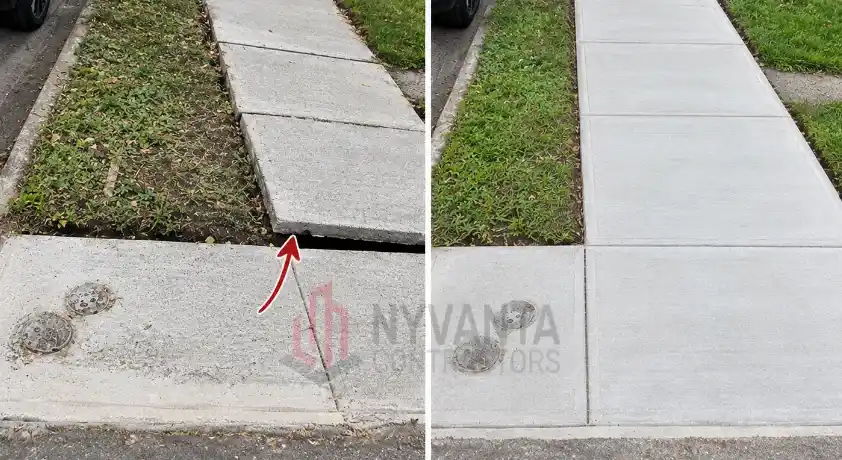
Photos and project specifics say more than a general description of the work ever could. NY Vanta Contractors keeps a record of completed sidewalk jobs, including trip hazard repairs, in its case studies, showing the actual before-and-after condition of the concrete rather than a stock photo standing in for the real thing.
Preventing the Next One
A repaired trip hazard can come back if whatever caused it in the first place never actually got addressed.
- Root barriers keep the same tree from pushing the new slab up again within a few years
- Regrading fixes the drainage issue that was eroding the base to begin with
- A routine visual check twice a year catches a small lift before it becomes a violation, or a claim
Replacing the concrete without fixing what caused the damage is usually just a repeat repair on a delay.
Frequently Asked Questions
How much height difference counts as a trip hazard in NYC?
NYC DOT generally treats a half-inch difference between adjacent slabs as a defect. Courts apply a separate, less rigid standard when deciding whether an injury claim can proceed.
Who is responsible for fixing a trip hazard, the city or the property owner?
For most private properties, the owner. NYC Administrative Code 7-210 shifted sidewalk maintenance responsibility from the city to property owners in 2003, with limited exceptions for owner-occupied one-to-three family homes used purely as residences.
How fast does a trip hazard need to be fixed once it's flagged?
75 days for most DOT violations, or 10 days if the condition is flagged as an immediate hazard.
Can a property owner be sued even for a small crack?
Possibly. Courts weigh more than height alone, including lighting, location, and how jagged the edge is, so a defect that seems minor can still support a claim depending on the circumstances.
Does homeowners insurance cover a sidewalk trip-and-fall claim?
It can, depending on the policy, but coverage limits and exclusions vary enough that it's worth confirming directly with the insurer rather than assuming a claim will be fully covered.
Ready to Get Started?
If a slab on your property has lifted, cracked, or dropped enough to catch a foot, get a free estimate or call (718) 593-4048. We'll measure the actual defect, tell you whether it meets the legal threshold, and handle the repair and permit together.
Licensed NYC Concrete Contractor
Need Our services?