-
1573 Carroll St, Brooklyn, NY 11213
Sidewalk Vaults in NYC: Repair Requirements and Legal Obligations
Sep 16, 2026
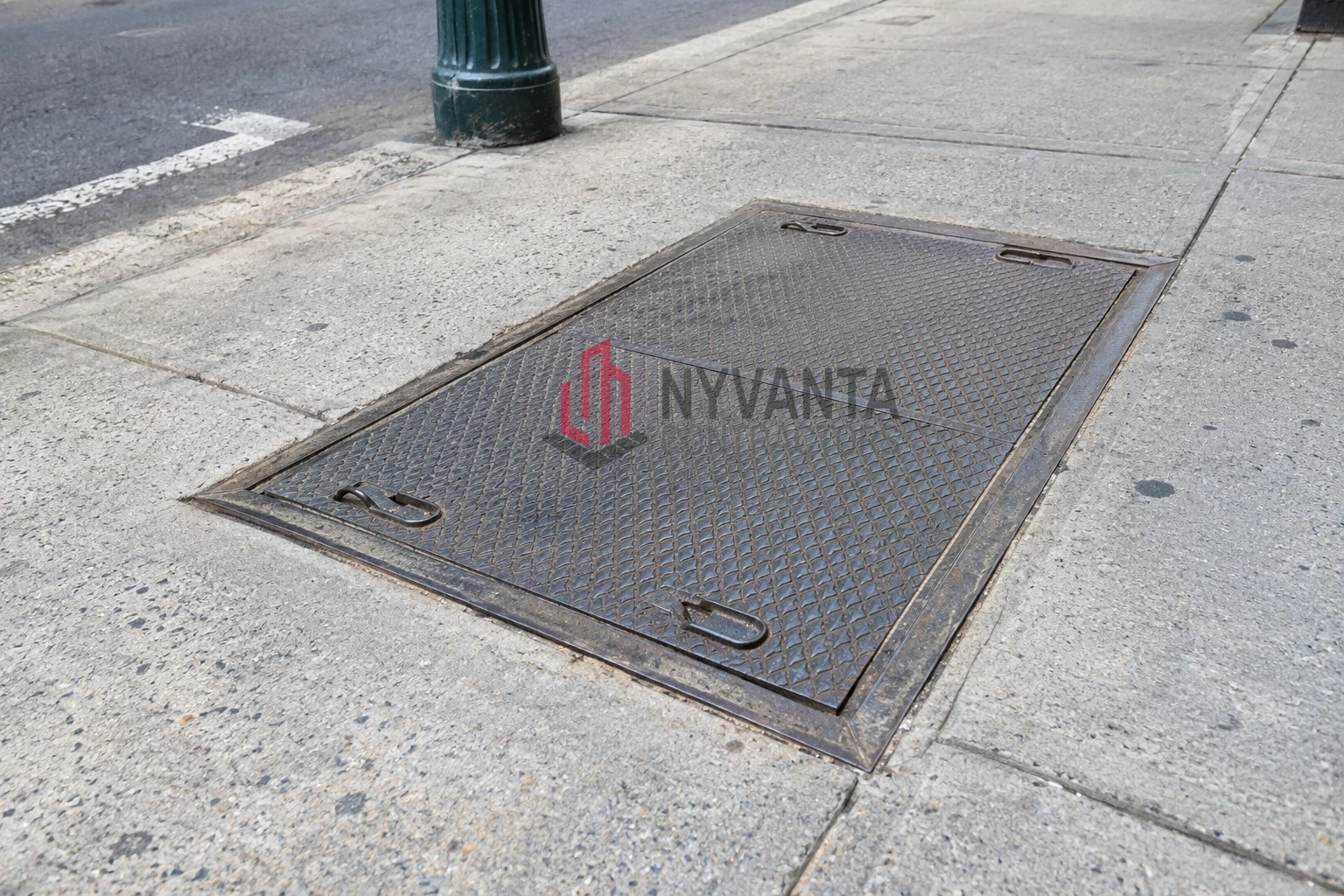
Not every sidewalk in New York City has solid ground underneath it. In parts of Manhattan, especially SoHo and the Lower East Side, the concrete pedestrians walk on is actually the roof of a room, an underground vault built into the sidewalk itself, sometimes with nothing but a steel beam and a waterproofing membrane between the street and open space below.
Most property owners with one of these vaults don't think about it until something goes wrong. Here's what a sidewalk vault actually is, what keeps it safe, and what NYC requires from the owner responsible for it.
What a Sidewalk Vault Actually Is
A sidewalk vault is an enclosed underground space beneath the public sidewalk, built as an extension of the adjacent building. Property owners in dense parts of Manhattan started building them in the late 1800s and early 1900s as a way to gain extra usable space without giving up square footage above ground, since land was already scarce and expensive.
Most vaults were used for storage, coal delivery access, or mechanical equipment, and many still are. In neighborhoods like SoHo, you can spot one from above by looking for small, round glass lenses embedded in the sidewalk, known as vault lights. Before electric lighting was common, these lenses let daylight into basement-level factory floors. Plenty are still there, functioning or not, more than a century later.
Building vaults are a different thing from utility vaults, like the ones Con Edison uses to run electrical and telecom lines under the street. Those belong to the utility, not the adjacent property, and the utility is responsible for maintaining them. A building vault, by contrast, extends from a specific property and is that owner's structure and responsibility.
Structurally, a typical building vault is built with a sidewalk-level concrete slab about four inches thick sitting on a waterproofing membrane, which sits on a structural slab underneath that's usually four to six inches thick and does the actual load-bearing work. NYC DOT requires that structural layer be able to support at least 600 pounds per square foot, the same weight standard applied to sidewalk doors, gratings, and covers.
Why Vaults Fail
Vault failure almost always starts the same way: water gets past the waterproofing membrane.
Once water reaches the structural layer, it does two things. In winter, it freezes and expands inside existing cracks, widening them a little more with every cycle. Year-round, it corrodes the steel beams and reinforcement carrying the load. Road salt tracked in during winter makes this worse, since deicing chemicals accelerate corrosion once they migrate down through the sidewalk joints and settle against exposed steel.
The dangerous part is that none of this is necessarily visible from above. A vault ceiling can look completely intact on the surface while the steel supporting it has lost most of its strength underneath. That's why a real vault assessment doesn't stop at looking at the surface. An engineer typically tests load capacity directly and, where the condition is uncertain, removes sections of the slab to inspect the structural members underneath rather than guessing from a visual check alone.
Legal Requirements and Permits
Sidewalk vaults come with a heavier legal footprint than a standard sidewalk repair, for a simple reason: a vault is private space built underneath public property, and the city treats it that way.
Any construction, alteration, or repair of a vault requires a permit from NYC DOT, and most vault work also needs a separate plan approval from the Department of Buildings. If the building sits in a historic district, the Landmarks Preservation Commission gets a say too, and if the vault is near a subway entrance or tunnel, the MTA may need to sign off as well.
Building a new vault, or enlarging an existing one, requires a license from DOT's Office of Franchises, Concessions and Revocable Consents, with a one-time license fee of $2 per square foot. On top of that, every vault owner pays an annual rental fee to the city for the space being used, typically somewhere between $250 and over $1,000 a year depending on the vault's size and location. Like other unpaid city charges, an overdue vault fee can turn into a lien against the property.
Property owners are also expected to carry liability insurance covering the vault, which makes sense once you consider that Administrative Code § 7-210, the same section that puts general sidewalk repair on property owners, applies to vaults too. If someone gets hurt because a vault wasn't properly maintained, that liability generally lands on the owner, not the city.
What Vault Repair Actually Involves and Costs
Repair scope depends entirely on how far the deterioration has gone.
- Vault light replacement, swapping out cracked or fogged glass lenses, generally runs $150 to $800 per unit depending on the type and whether it needs to match a landmarked building's original appearance.
- Localized repair, addressing a section of deteriorated ceiling, corroded beams, or minor water intrusion without a full teardown, typically costs $3,500 to $8,000.
- Major structural repair, including beam replacement, shoring, or significant waterproofing work, can run $10,000 to $50,000 or more depending on the extent of the damage.
- Full vault replacement, tearing out the existing structure and rebuilding it to current code, generally costs $200 to $250 per square foot. A modest 500-square-foot vault at that rate runs roughly $100,000 to $125,000, not including engineering fees, which is worth knowing before assuming a repair will always be the cheaper path forward.
An engineering inspection to determine which category a specific vault falls into typically costs $500 to $1,500. It's worth doing before assuming the worst or the best about a vault's condition, since so much of the actual damage isn't visible from the surface.
What Happens When a Vault Is Neglected
The consequences of an ignored vault go beyond a DOT violation.
Legal cases involving sidewalk vaults describe pedestrians falling through failed grates or cracked vault ceilings, in some documented instances dropping ten feet or more into the space below, with injuries ranging from fractures to lasting nerve damage. In at least one documented case, a Department of Buildings inspection of a neglected vault led to a full vacancy order for multiple buildings on the block, since the structure was found unsafe to occupy above it.
That's part of why sidewalk vault failures tend to get more public attention than an ordinary cracked sidewalk. Most pedestrians assume the ground under a sidewalk is solid. A vault failure is a reminder that in parts of Manhattan, it sometimes isn't, and that the structure keeping it that way needs the same kind of ongoing maintenance as any other part of the building it extends from.
Getting a Vault Inspected or Repaired
Vault work sits at the intersection of structural engineering, DOT and DOB permitting, and, on older buildings, historic preservation rules, which makes it a different job than a standard sidewalk repair. A contractor who treats it like routine concrete work is likely to miss something that only shows up after the permit is closed and the sidewalk looks fine on the surface.
NY Vanta Contractors handles vault-related sidewalk repair across Brooklyn, the Bronx, Manhattan, and Queens, coordinating the DOT and DOB permit process alongside the structural and waterproofing work itself.
Frequently Asked Questions
What is a sidewalk vault?
An enclosed underground space beneath a public sidewalk, built as an extension of the adjacent building. They were common in dense parts of Manhattan built in the late 19th and early 20th centuries and were typically used for storage, coal access, or mechanical equipment.
Who is responsible for maintaining a sidewalk vault in NYC?
The property owner. The same section of NYC's Administrative Code that puts general sidewalk repair on property owners, § 7-210, applies to vaults extending from their building as well.
How much does sidewalk vault repair cost?
It depends on scope. Vault light replacement runs $150 to $800 per unit, localized repairs are typically $3,500 to $8,000, major structural work can reach $10,000 to $50,000 or more, and full replacement generally costs $200 to $250 per square foot.
What causes most sidewalk vault failures?
Water getting past the waterproofing membrane. Once inside, it corrodes structural steel and, in winter, freezes and widens existing cracks. Road salt accelerates the corrosion once it works its way down through the sidewalk joints.
Does a sidewalk vault need a separate permit from a regular sidewalk repair?
Yes. Vault construction, alteration, or repair requires a permit from NYC DOT and typically a separate plan approval from DOB, on top of any Landmarks or MTA approval that applies to the specific property.
Ready to Get Started?
If your property has a sidewalk vault showing cracks, water stains, damaged vault lights, or a section that feels different underfoot, get a free estimate or call (718) 593-4048. We'll assess what's actually happening below the surface and handle the DOT and DOB permitting alongside the repair.
Licensed NYC Concrete Contractor
Need Our services?