-
1573 Carroll St, Brooklyn, NY 11213
NYC Sidewalk Dos and Don'ts Every Property Owner Should Know
Aug 18, 2026
Most people never think about the sidewalk in front of their building until something goes wrong with it. Then suddenly there's a lot to think about: whose job it actually is, what the rules are, what happens if you get it wrong. New York treats sidewalks a little differently than most cities, and a lot of the confusion we see from property owners comes down to a handful of things nobody told them until a violation notice showed up.
Here's the rundown, the stuff that actually matters if you own property in this city.
Do: Accept That It's Yours to Maintain, Not the City's
This one surprises people every time. Under NYC Administrative Code Section 7-210, the sidewalk in front of your property is your legal responsibility, not the Department of Transportation's. Cracks, uneven flags, missing sections, all of it falls on the owner to fix, even though the sidewalk itself is public land. The city built the system this way back in 2003 specifically to shift that burden off itself, and it hasn't changed since.
Don't: Wait for a Violation Notice to Take a Look
DOT defines a trip hazard as a height difference of half an inch or more between two adjacent flags. That's a small gap, easy to miss if you're not looking for it, easy for an inspector to catch if you are. Walking your own sidewalk once in a while and checking for lifted edges, wide cracks, or spots where water pools takes ten minutes and can save you from a notice with a 75 day clock attached to it.
Do: Know the Actual Snow Removal Window
This is one of the most enforced rules in the city, and also one of the most misunderstood. If snow stops falling during the day, you have four hours to clear it. If it stops overnight, between 9pm and 7am, you generally have until 11am to get it done. You're required to clear a path at least four feet wide, plus any fire hydrant, curb cut, or corner ramp that touches your property. And you can't just push the snow into the street, that's its own violation. Fines start around $100 for a first offense and climb from there, and the city hands out thousands of tickets during a single storm when people wait too long.
Don't: Assume You Can Use Whatever Material You Want
Plain concrete is the default material for the legal sidewalk strip in front of your property, and in most cases it's what the city expects unless you're in one of a handful of commercial zoning districts that allow pigmented concrete instead. Brick, bluestone, pavers, decorative concrete, all of that falls under what DOT calls a "distinctive sidewalk," and installing any of it on the actual public sidewalk means going through DOT and Public Design Commission approval first, plus signing a maintenance agreement. Historic districts flip this around, where bluestone is often required to match the block instead of being an upgrade you're choosing. Either way, it's worth knowing before you fall in love with a look that isn't a simple swap.
Do: Pull a Permit Before Any Repair Starts
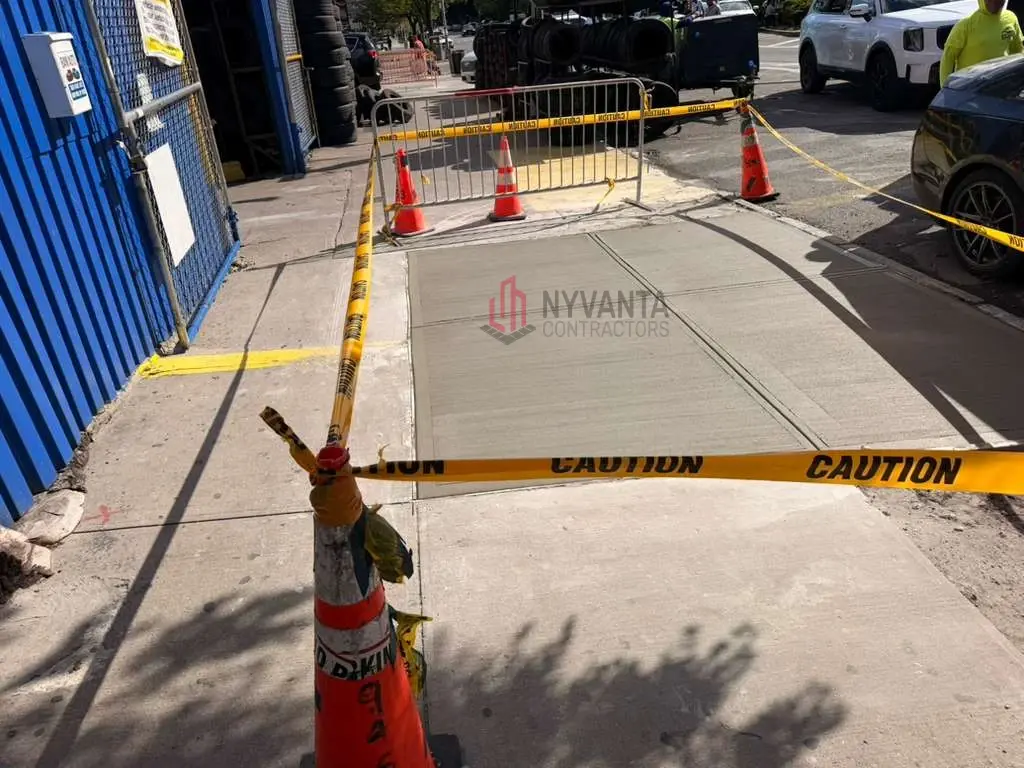
Even a straightforward repair needs a Sidewalk Construction Permit from DOT, and this catches a lot of people off guard because it feels like it should be optional for small jobs. It isn't. The permit runs $70 per 300 linear feet, with an extra $70 if you're on a corner property. If you're doing the work yourself as the homeowner, you can apply by mail with a notarized Affidavit of Ownership. If you're hiring it out, your contractor has to be registered with DOT and pull the permit themselves, which is one more reason to check that credential before signing anything. Properties in historic districts need sign off from the Landmarks Preservation Commission on top of the DOT permit.
Don't: Dump Rock Salt Next to Street Trees
It's the easiest de-icer to grab, but heavy rock salt use right around a tree pit does real damage to root systems and the soil over time, and NYC has a lot of street trees whose roots are already fighting for space under the sidewalk. Sand gives you traction without the chemical damage, and there are calcium-based alternatives that are gentler on plantings if you'd rather stick with something that melts ice. Small choice, but it adds up over years on a block full of trees.
Do: Keep the Actual Path Clear
Trash cans, planters, scaffolding, construction materials, all of it needs to stay off the walkable part of the sidewalk outside of designated pickup times or an active permit. This matters more than it might seem, because the city has real accessibility requirements for wheelchairs and strollers to get through, and an obstruction complaint is its own kind of violation separate from a physical defect in the concrete.
Don't: Assume a Notice Will Just Go Away
This is the one that costs people the most. Once DOT issues a Notice of Violation, you've got 75 days to fix it and get it reinspected, or 10 days if it's flagged as an immediate hazard. Miss that window and the city sends its own contractor, bills you at well above what you'd have paid on your own, and if that bill sits unpaid past 90 days, it becomes a lien recorded against your property. At that point it's not just a repair anymore, it's something that shows up in a title search and slows down a sale or refinance months down the line. Every one of these dos and don'ts really comes back to this single point: the earlier you deal with it, the cheaper and simpler it stays.
Let NYVantaContractors Handle the Details
Sidewalk rules in this city are specific, and getting one piece wrong, the wrong material, a missing permit, a missed deadline, tends to cost more than getting it right the first time would have. At NYVantaContractors, we handle the whole process for property owners across NYC: inspections, permitting, DOT-compliant repairs, and the dismissal filing that actually closes out a violation for good.
If you're not sure where your sidewalk stands, reach out to NYVantaContractors for a free assessment before DOT tells you there's a problem.
Licensed NYC Concrete Contractor
Need Our services?