-
1573 Carroll St, Brooklyn, NY 11213
How Much Mortar to Remove When Repointing Bricks
Sep 04, 2026
Repointing looks simple from the sidewalk. Scrape out the old mortar, pack in new, done. The step that actually determines whether the job holds up is how deep that old mortar gets removed, and it's also the step most often rushed or skipped to save time.
Get the depth wrong and the new mortar either falls out within a season, or, on the other end, removing too much weakens the wall it's supposed to be protecting.
How Deep Old Mortar Should Actually Come Out
The standard used across the restoration industry, and the one referenced in the National Park Service's own preservation guidelines, is 2 to 2.5 times the width of the joint. A typical 3/8-inch joint should be raked out to somewhere between 3/4 inch and just under an inch. Even on narrower joints, most masons won't go shallower than 3/4 inch, since anything less doesn't leave enough room for the new mortar to actually grip.
There's an upper limit too. Removing more than roughly half the width of the brick or block itself starts to compromise the wall's structural bond, not just the joint. A contractor going too aggressive with a grinder to save time can do real damage that a property owner won't notice until much later.
Why Shallow Removal Fails Fast
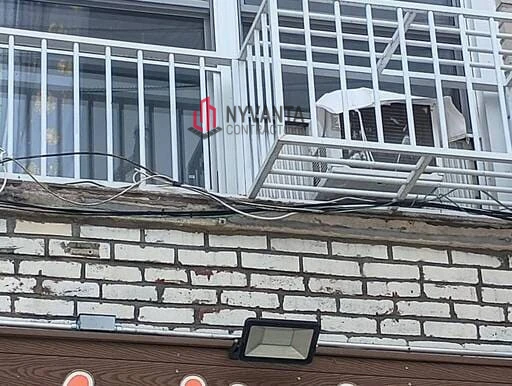
When old mortar is only chipped away at the surface instead of raked back to sound material, the new mortar has nothing solid to bond to underneath it. It sits on top of old, crumbling material instead of clean brick.
That kind of job can look fine for a season, sometimes even through a full year. Then a freeze-thaw cycle gets underneath it, and the new mortar pops right back out, sometimes in whole chunks. At that point the property owner is paying for the same repair twice, and the underlying brick has been exposed to moisture for another year in the meantime.
Why Over-Removal Is Its Own Problem
Less talked about is the opposite mistake: cutting too deep or too wide. This usually happens with power tools, angle grinders especially, used carelessly to speed up the job. Cutting past the safe depth, or letting the grinder chip into the brick edges themselves, weakens the bond between individual bricks rather than just the joint.
On a load-bearing wall, that's not cosmetic. It's the kind of shortcut that shows up years later as a bigger structural repair.
Why NYC Treats This as More Than Cosmetic Work
New York's facade laws exist because of a specific, well documented history. In May 1979, a Barnard College freshman named Grace Gold was killed on Broadway near 115th Street when a piece of masonry fell from a building above her. She was 17. Her death led directly to Local Law 10 in 1980, requiring regular facade inspections on buildings over six stories. A Legal Aid attorney was killed by falling masonry in downtown Brooklyn a few years later, which pushed the city to tighten the law further into what's now known as Local Law 11, or the Facade Inspection and Safety Program (FISP). In 2019, an architect was killed by falling facade material near Times Square, a reminder that the risk the law was written for hasn't gone away.
Mortar joint condition is one of the specific things FISP inspectors check on every cycle. Open, cracked, or deteriorated joints are a documented defect condition, and a repointing job that failed early can end up flagged the same way the original deterioration would have been.
Permits and Landmarks Rules
Whether repointing needs a permit depends heavily on the building.
If the property is landmarked or sits inside a historic district, Landmarks Preservation Commission approval is required before the work starts, even when the repair uses matching materials. Repointing with the wrong mortar color or composition is one of the most common reasons LPC sends a violation letter to owners who assumed a like-for-like repair didn't need sign-off. A first violation typically gives the owner a chance to correct it at no cost, but a Type A violation that isn't cured can carry a fine up to $5,000, plus up to $250 a day after that.
If the building isn't landmarked, repointing on its own usually doesn't require a separate DOB permit. In practice, most repointing jobs above the ground floor need scaffolding to access the work, and scaffolding has its own permit requirement regardless of landmark status. If the job is combined with structural brick replacement or lintel work, that typically brings DOB into it as well.
What Repointing Actually Costs
Pricing depends heavily on scope and building height. For a standard three-story brownstone facade, full repointing typically runs $18,000 to $40,000. Smaller, localized patching, fixing a section rather than the whole facade, generally falls between $5,000 and $15,000.
Scaffolding is often the biggest line item people don't expect. A full-height scaffold setup, including its own permit, typically adds $10,000 to $25,000 depending on the building. On a landmarked property, mortar analysis to match the original composition and color adds cost too, but it's not optional if LPC approval is required.
A site visit is the only way to get a number that actually applies to a specific building, since access, height, and the extent of deterioration change the price more than almost anything else.
Why This Isn't a DIY Project
Beyond the depth and permit issues, matching mortar matters more than most people expect, especially on older buildings. A lot of pre-war NYC masonry was built with lime-based mortar, which is softer and more breathable than the modern portland cement mixes sold at hardware stores. Repointing an old building with the wrong mortar type doesn't just look different. Hard modern mortar can trap moisture against softer historic brick and accelerate exactly the kind of deterioration repointing is supposed to fix.
NY Vanta Contractors handles brick pointing across Brooklyn, the Bronx, Manhattan, and Queens, including the mortar analysis and Landmarks coordination that older buildings often require. We remove old mortar to the correct depth, match it to what the building actually needs, and handle the permit side so it's not left for the property owner to sort out.
Frequently Asked Questions
How deep should old mortar be removed before repointing?
2 to 2.5 times the width of the joint, with a minimum of about 3/4 inch even on narrow joints. Going deeper than roughly half the width of the brick itself risks weakening the wall rather than just the joint.
Does repointing require a permit in NYC?
It depends on the building. Landmarked properties and those in historic districts need Landmarks Preservation Commission approval before work starts. Non-landmarked buildings usually don't need a separate DOB permit for repointing alone, though scaffolding almost always requires its own permit.
Can repointing affect Local Law 11 or FISP compliance?
Yes. Mortar joint condition is one of the things FISP inspectors check on buildings over six stories. A repointing job that fails early can get flagged during a facade inspection cycle the same way the original deterioration would have.
What happens if the wrong mortar is used on an older building?
On pre-war masonry built with lime mortar, using modern portland cement mortar can trap moisture against the brick and speed up damage instead of preventing it. Matching the original mortar composition matters as much as the repair itself.
How much does repointing cost for a typical NYC building?
A full repointing job on a standard three-story brownstone facade generally runs $18,000 to $40,000. Smaller, localized repairs are usually $5,000 to $15,000, not including scaffolding.
Ready to Get Started?
If your building's mortar joints are cracked, crumbling, or overdue for repointing, get a free estimate or call (718) 593-4048. We'll inspect the facade, tell you what it actually needs, and handle the permits and Landmarks coordination if your building requires it.
Licensed NYC Concrete Contractor
Need Our services?