-
1573 Carroll St, Brooklyn, NY 11213
How Much Does It Cost To Repair An NYC Sidewalk?
Aug 11, 2026
Most New York City property owners spend somewhere between $1,000 and $3,000 to repair a residential sidewalk, with the citywide average landing near $1,975. Priced by area, expect roughly $5 to $15 per square foot for patching and repairs and $12 to $25 per square foot for full flag replacement. Small jobs, just like a single cracked slab or two, can come in around $300 to $800, while commercial frontages and DOT violation work routinely climb past $7,000.
Those numbers cover the vast majority of jobs, but the spread is wide for a reason. A sidewalk in New York City isn't just concrete. It's a piece of city infrastructure that you happen to be legally responsible for, sitting on top of tree roots the Parks Department owns, requiring a permit from the Department of Transportation, and installed by a contractor navigating some of the most expensive labor conditions in the country. Understanding what actually drives the number is the difference between a fair quote and a painful one.
What Are You Really Paying For When You Fix a New York Sidewalk?
The concrete itself is almost never the expensive part. Standard 4,000-PSI mix with proper formwork and joints runs about $1.50 to $3 per square foot, which is a rounding error on most invoices. Demolition and hauling add another $2 to $4 per square foot, since broken concrete has to be broken up, loaded, and legally disposed of. And in Manhattan, that often means a truck idling on a street where there's nowhere to park it.
Everything else on the bill is labor, logistics, and paperwork. New York's construction labor rates are among the highest in the nation, and sidewalk crews frequently need extra hands just to manage pedestrian flow, set up temporary barriers, and work around parked cars, scaffolding, cellar doors, and utility caps. A job that would take one afternoon in a suburb can stretch across two days here simply because of access. When you're comparing quotes, ask contractors to break out demolition, materials, labor, and permits separately. It's the fastest way to spot who's padding and who's being straight with you.
The Price Changes Dramatically Depending on the Type of Repair
Not every defective sidewalk needs the same treatment, and matching the fix to the damage keeps you from overpaying. Minor cosmetic cracks and small holes can often be sealed for as little as $1 to $10 per square foot, since this is the cheapest scenario, and it's usually only appropriate for hairline damage that isn't a trip hazard. Resurfacing, which means stripping the worn top layer and applying a fresh one, generally falls around $8 to $12 per square foot.
Once slabs are sunken, heaved, or crumbling, patching stops being a real option. Replacing individual flags typically runs $10 to $20 per square foot, and a crumbling section that needs to be reshaped and repoured lands closer to $6 to $9 per square foot when the damage is contained. For context, a standard 25-square-foot stretch of sidewalk usually costs between $1,000 and $2,500 to fully replace. Larger jobs often get better per-foot pricing. Many contractors switch to a square-foot rate once the damaged area exceeds around 400 square feet, since mobilization costs get spread across more work.
Permits Are Cheap, But Skipping Them Isn't an Option
Any sidewalk repair or replacement in New York City requires a permit from the DOT before work begins, and the standard fee is a very manageable $70 for up to 300 linear feet. That's genuinely one of the few bargains in this process. Corner properties are the exception worth flagging, since they often need two permits, one for each frontage, which quietly doubles that line item and can complicate scheduling.
Private homeowners handling small repairs themselves can apply for a sidewalk repair permit by mail, which is a legitimate way to save on labor for minor work. If you're hiring out, a reputable contractor will pull permits as part of the job and should state so in writing before breaking ground. Any contractor who suggests skipping the permit is telling you something important about how they operate, and if the work fails inspection later, you're the one holding the bill, not them.
Tree Roots Are the Single Biggest Wild Card in Your Estimate
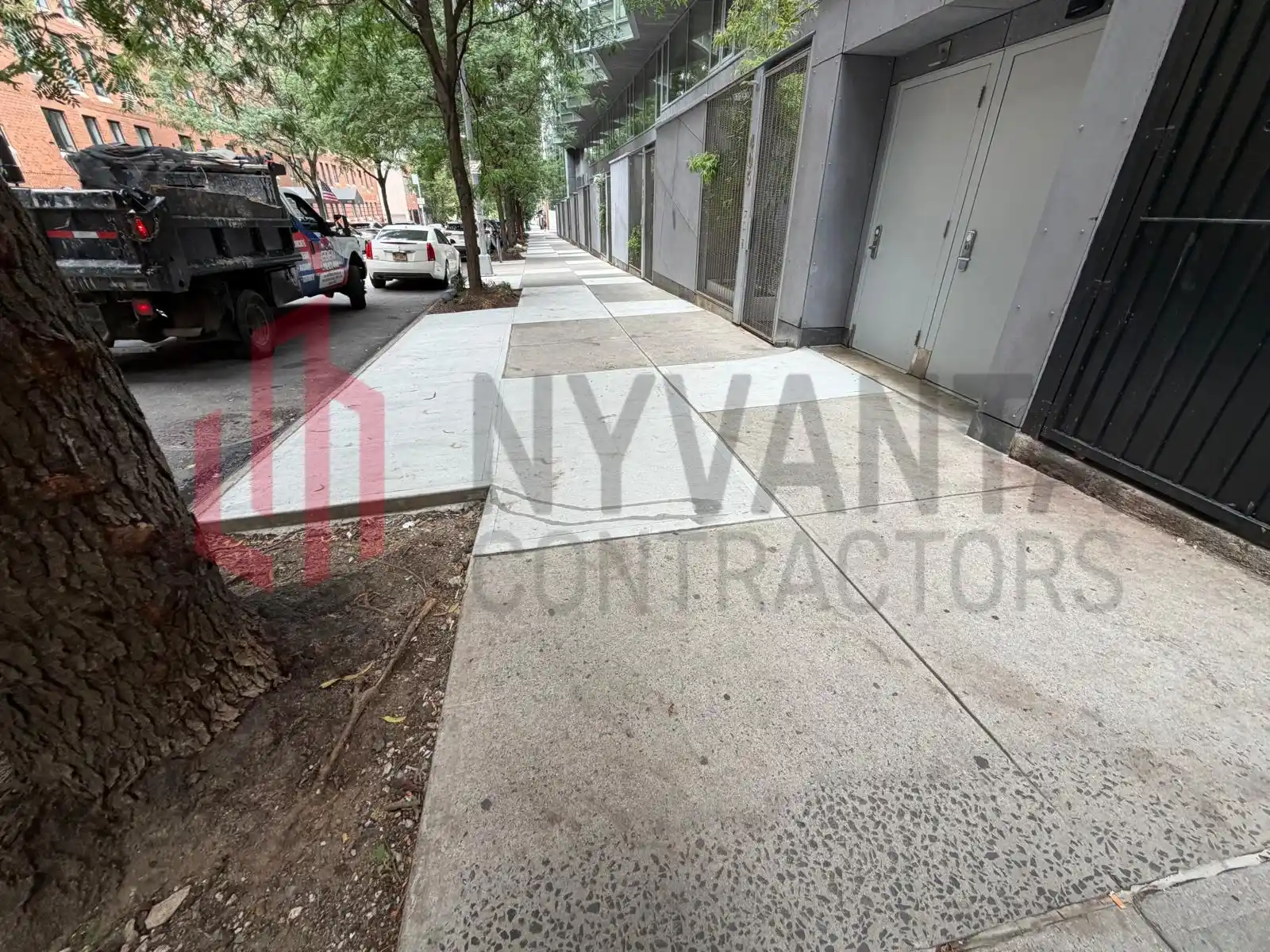
City street trees are the most common reason New York sidewalks lift, crack, and buckle, and they're also the reason two houses on the same block can get quotes that differ by thousands of dollars. The Parks Department owns every street tree in the public right-of-way, which means the roots under your sidewalk aren't yours to deal with however you please. Cutting or shaving city tree roots without approval is a serious offense that carries fines up to $15000 and, in extreme cases, criminal exposure.
If a tree is involved, your contractor needs a Tree Work Permit from NYC Parks in addition to the DOT sidewalk permit. You apply online with photos of the damage, wait for an inspection, which usually takes about 45 days, and receive a permit valid for 90 days along with site-specific instructions. Excavation near roots has to be done carefully, often by hand or with pneumatic tools, and approved fixes may include ramping the concrete, expanding the tree bed, or using reinforced slabs. All of that adds labor hours, which is exactly why root-related jobs skew toward the top of the price range. Budget for it upfront rather than discovering it mid-project.
Some Homeowners Can Get the Repair Done for Free
This is the part most property owners don't know about, and it's worth checking before you sign anything. NYC Parks runs the Trees & Sidewalks Program, which performs free repairs on sidewalks severely damaged by city tree roots in front of one-, two-, and three-family homes classified as NYC Tax Class 1, provided the property isn't used commercially and is owner-occupied.
The catch is funding and prioritization. The program has a limited budget, so sites are scored using a rating system that weighs how severe the damage is, how much foot traffic the sidewalk carries, and the size and condition of the tree. If your site rates below the threshold, you can request a new inspection in three years or repair it yourself in the meantime. There's also a second path worth knowing: if you pay out of pocket for damage you believe a city tree caused, you can file a claim with the NYC Comptroller's office within 90 days of completing the repair. It isn't guaranteed money, but the paperwork is free and the claim is a lot stronger when you've kept your permits, photos, and receipts organized.
Where Your Property Sits Changes the Number More than You'd Think
Borough matters, though not always in the direction people assume. Full replacement in the Bronx and Queens commonly runs $15 to $20 per square foot, with violation removal work in the $1,200 to $3,500 range. Manhattan trends higher, largely because access is harder due to narrow sidewalks, constant foot traffic, restricted staging, and tighter delivery windows all translate into more labor hours for the same square footage.
Timing plays a role too. Winter pours often require curing blankets or heat protection to set properly, which adds cost, and weather delays can stretch a job past the point where it's convenient. Scheduling in spring or fall, when crews aren't slammed and conditions are forgiving, tends to earn you better pricing and a more attentive contractor. If you've received a violation in December, don't panic; the 75-day period runs the same year-round, and DOT expects repairs to be scheduled as weather permits.
How to Keep the Bill Reasonable Without Cutting Corners
Start by verifying licensing. Your contractor should hold a license from the Department of Consumer and Worker Protection, and you can check it directly in the city's database rather than taking anyone's word for it. Get at least three written quotes, and make sure each one covers the same scope. A suspiciously low bid usually means someone left out demolition, disposal, or the permit.
Measure your damaged area, multiply by the appropriate per-square-foot rate, then add 15% to 20% for contingencies, because concrete work almost always turns up something unexpected underneath. If you disagree with a violation, you can request a re-inspection through 311 within the 75-day window, and a different inspector will take a second look. And once your repair is finished, don't assume you're done, but you have to call 311 to schedule your sidewalk violation dismissal inspection. Until that inspection clears, the violation stays on file with the County Clerk no matter how beautiful your new concrete looks.
Get a Straight Answer on Your Sidewalk From NY Vanta Contractors
Every sidewalk in New York City tells a slightly different story, and the only way to know what yours will actually cost is to have someone measure it, look at the tree, and check the violation diagram against the real conditions on your block. That's where NY Vanta Contractors comes in. The team handles sidewalk repair and replacement across all NYC boroughs, pulls the DOT and Parks permits so you're not chasing paperwork, and works to specification so your repair clears the dismissal inspection the first time.
If you've got a cracked flag, a heaving slab near a street tree, or a Notice of Violation with the clock already running, don't guess at the number. Reach out to NY Vanta Contractors for a free on-site estimate and a written, itemized quote that includes demolition, materials, labor, and permits broken out line by line, so you can see exactly what you're paying for. Get it scheduled before the 75 days run out and the city sends its own crew at two to three times the price.
Contact us today for a free online estimate, and let our trusted experts make your sidewalk back to compliance.
Licensed NYC Concrete Contractor
Need Our services?