-
1573 Carroll St, Brooklyn, NY 11213
How Much Does a Concrete Patio Cost in NYC?
Nov 18, 2026
A new concrete patio in NYC costs about $8 to $15 per square foot, so a 10 by 20 foot patio installation runs roughly $1,600 to $3,000 with materials and labor. Stamped concrete costs $12 to $20 per square foot. If an old slab has to come out first, add about $6 to $14 per square foot for demolition and hauling. NYC prices sit above the national average, and the gap comes mostly from labor, tight access, and local rules, not from the concrete itself.
Concrete Patio Cost Per Square Foot in NYC
Size drives the price, and the math is simple multiplication. Here is what common patio sizes cost at $8 to $15 per square foot for plain concrete and $12 to $20 for stamped.
|
Patio size |
Plain concrete |
Stamped concrete |
|
10 x 10 ft (100 sq ft) |
$800 to $1,500 |
$1,200 to $2,000 |
|
12 x 14 ft (168 sq ft) |
$1,350 to $2,500 |
$2,000 to $3,400 |
|
10 x 20 ft (200 sq ft) |
$1,600 to $3,000 |
$2,400 to $4,000 |
|
20 x 20 ft (200 sq ft) |
$3,200 to $6,000 |
$4,800 to $8,000 |
Elsewhere in the country, a plain slab often runs closer to $5 to $10 per square foot, so a higher NYC number is normal.
New Installation vs. Replacement Costs
A new patio installation is the cheaper job because nothing has to be torn out. The price covers excavation, a compacted gravel base, forms, wire mesh or rebar, the pour, and the finish.
Replacement adds demolition and disposal on top of the new pour. Nationally, removal runs about $3 to $8 per square foot, and dense city markets push that toward $6 to $14. Reinforced slabs cost $1 to $3 more per square foot to break up because the rebar has to be cut and carted away. Add it up and a full replacement in NYC often lands between $14 and $29 per square foot, or $2,800 to $5,800 for a 200 square foot patio.
If your slab is only cracked or worn but structurally sound, ask about resurfacing. Minor repairs and resurfacing usually cost $1 to $5 per square foot. That will not fix a slab that has heaved or settled, but it can save you a full tear-out.
Concrete Patio Cost by Finish
The finish you choose affects both the appearance and the cost of your patio. Plain concrete is the most affordable option, while stamped concrete costs more because it requires additional materials, tools, and finishing work. Here's how the two compare in NYC.
Stamped concrete costs about $4 to $5 more per square foot than a standard gray slab. In NYC, that puts stamped concrete at around $12 to $20 per square foot, compared with $8 to $15 for plain concrete. For a 200-square-foot patio, you would pay roughly $2,400 to $4,000 for stamped concrete versus $1,600 to $3,000 for a plain slab.
The added cost covers decorative colors, stamping tools, and the extra labor involved in creating the pattern. The contractor has to apply the design while the concrete is still workable, so timing and experience matter. More elaborate patterns and multiple colors can push the price toward the higher end of the range.
Stamped concrete also needs regular maintenance to keep its appearance. Plan on resealing the surface every two to three years, at an estimated cost of $1 to $3 per square foot.
If you like the appearance of natural stone but want to keep costs down, stamped concrete can be a more affordable alternative. For a simple outdoor space with room for a grill and patio furniture, plain concrete is usually a practical choice.
Patio Cost Based on Materials
Concrete is not the only option for an outdoor patio. Depending on your budget and the look you want, you can also consider concrete pavers, brick pavers, or natural stone. Each material has a different installation cost, appearance, and maintenance requirements.
Plain concrete has the lowest upfront cost among these options, while natural stone sits at the higher end. The paver and stone prices below are typical national installed ranges, although NYC projects often fall in the upper half of these estimates.
|
Material |
Typical cost per sq ft |
|
Plain concrete (NYC) |
$8 to $15 |
|
Stamped concrete (NYC) |
$12 to $20 |
|
Concrete pavers |
$8 to $15 |
|
Brick pavers |
$10 to $20 |
|
Natural stone |
$15 to $50 |
Pavers generally require more installation work because each piece has to be placed individually over a properly compacted base. However, they can be easier to maintain in the long run. If a paver sinks, cracks, or becomes stained, you can usually remove and replace that individual piece. A damaged concrete slab, on the other hand, may require patching or replacing an entire section.
Natural stone, including bluestone and travertine, is the most expensive option on this list. Its appearance and durability make it a popular choice for higher-end patio projects.
Permeable paving is another option worth considering in NYC. Around 72 percent of the city's surface is impervious, meaning rainwater runs off paved areas instead of soaking into the ground. Permeable materials allow more water to pass through the surface and into the underlying soil, helping reduce runoff.
Factors That Affect the Cost of a Concrete Patio
The size and type of patio are only part of the total cost. The condition of your yard, how easily workers can reach the installation area, and the amount of preparation needed can all affect your final quote. Here are some of the main factors to consider.
Site preparation and excavation
Before pouring concrete, the crew needs to prepare the ground, remove grass or existing materials, and create a stable base. If the soil is uneven, rocky, or poorly compacted, additional excavation and grading may be necessary. These extra steps increase labor and preparation costs.
Patio size and shape
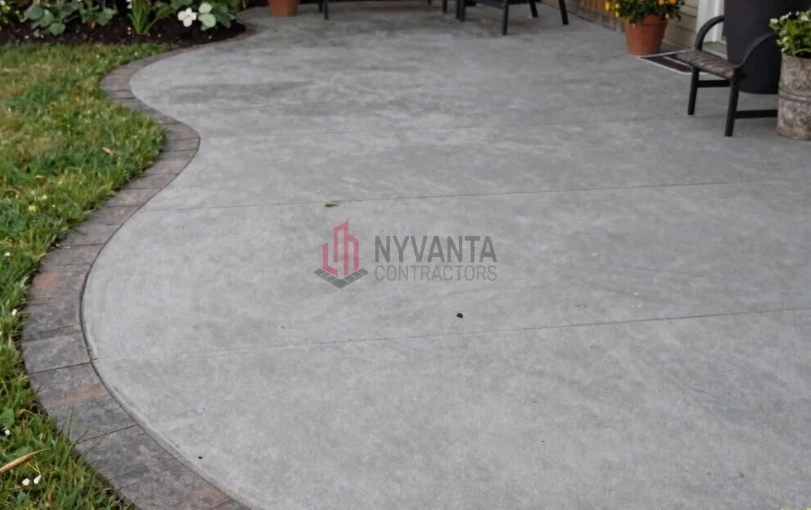
Larger patios require more concrete, reinforcement, and labor. However, the shape also matters. A simple rectangular patio is generally easier and faster to build than one with curves, multiple levels, or irregular edges. More complex designs require additional formwork and finishing.
Concrete thickness and reinforcement
Most residential patios use a 4- to 5-inch concrete slab. If the area needs a thicker slab or additional reinforcement, material and labor costs will increase. Your contractor can recommend the right thickness and reinforcement based on the intended use and ground conditions.
Site access
Getting concrete and equipment to the backyard can be difficult on some NYC properties. If a concrete truck cannot reach the work area, the crew may need a pump or additional equipment to move the concrete. Narrow walkways, stairs, and limited working space can also increase labor time.
Drainage and ground conditions
Water needs to drain away from the patio rather than collect on the surface or near the building foundation. If the yard has poor drainage or an uneven slope, the crew may need to adjust the grading or install additional drainage features. This adds to the overall project cost.
Demolition and disposal
If you're replacing an existing patio, the contractor must break up and remove the old concrete before installing the new slab. The cost depends on the slab's thickness, whether it contains rebar, how difficult it is to access, and how much debris needs to be hauled away.
Finish and design choices
A basic broom or smooth finish costs less than decorative options. Stamped patterns, custom colors, exposed aggregate, and special borders require additional materials and skilled labor. The more detailed the design, the more time the crew will need to complete it.
Permits and property requirements
Some patio projects may require permits or additional approvals, depending on the location and scope of work. Front-yard installations, historic properties, and co-op or condo buildings may have specific restrictions. Check the applicable NYC requirements and property rules before starting work.
Get a Clear Estimate for Your Patio Project with NY Vanta Contractors
The cost of a concrete patio depends on your yard, ground conditions, material choices, and the amount of preparation required. A site inspection helps identify what the project involves and gives you a more accurate estimate before work begins.
Whether you're installing a new patio or replacing an old concrete slab, NY Vanta Contractors can assess your property, walk you through your options, and provide a quote based on your project requirements.
Ready to plan your patio project? Contact us today to request a free estimate and schedule a consultation with us.
Licensed NYC Concrete Contractor
Need Our services?